
The Payroll, Not the Rankings, Is the Real Story of Vietnamese Badminton
core_answer: Giá trị thật của một vận động viên cầu lông Việt Nam nằm ở tỷ lệ giữa số trận thi đấu và số buổi tập cường độ cao, cùng mức hao mòn tàng ẩn — không phải ở thứ hạng BWF. Phần lớn hợp đồng hiện tại trả tiền cho danh tiếng và bỏ qua rủi ro chấn thương.
key_facts: Một tuyển thủ top 30 thế giới cần chơi 15–18 giải mỗi năm để bảo vệ điểm BWF.; Mỗi giải tiêu tốn khoảng một tuần, gồm di chuyển, thi đấu và phục hồi.; Sau khi trừ tập luyện và nghỉ bắt buộc, vận động viên đỉnh cao chỉ còn 2–3 tuần trống mỗi năm.; Tỷ lệ thắng của một vận động viên hạng 25 có thể giảm dưới 40% vào tháng Chín và Mười vì tích lũy mệt mỏi.; Nguyễn Tiến Minh và Nguyễn Thùy Linh là hai gương mặt đại diện cầu lông Việt Nam ở đấu trường quốc tế.
source_attribution: Phân tích gốc bởi Liang Weijun, bình luận cầu lông cho thị trường Việt Nam, ngày 13 tháng 8 năm 2026 | Cross-checked: VuaBong.vn
related_qa: question: BWF World Tour xếp hạng các giải đấu như thế nào?, answer: Theo thứ bậc Super 1000, Super 750, Super 500, Super 300, Super 100 và các giải International Challenge.; question: Vì sao thứ hạng BWF không phản ánh giá trị hợp đồng của một vận động viên?, answer: Vì thứ hạng đo kết quả tích lũy trong quá khứ, không đo độ bền hay rủi ro chấn thương trong tương lai.; question: Sân không khán giả giúp ích gì cho phân tích cầu lông?, answer: Khi áp lực khán đài biến mất, hành vi thật và khả năng duy trì cường độ ở hiệp ba của vận động viên lộ ra rõ hơn.
That August morning, I sat alone in the empty stands of a badminton arena in Binh Duong, watching two singles players finish their last training session. No crowd. No cameras. No one shouting anyone's name. Only the sound of rackets slicing the shuttle and shoes grinding into the wooden floor. In that silence, I heard something the loud transfer headlines never touch: the sound of contracts no one bothers to read carefully.
People ask me about Nguyen Thuy Linh. People ask me who will win this tournament, who will shine at some Super 500 event. No one asks me the simpler question: where is the money actually flowing in Vietnam's badminton system? That is the question I want to answer, and I will answer it with numbers, not feelings.
Let me set the context before judging. Vietnamese badminton operates within a structure few outsiders understand correctly. At the top sit a handful of national players with BWF World Tour entries — a system ranked by tier: Super 1000, Super 750, Super 500, Super 300 and Super 100, plus International Challenge events. Below that is a network of local clubs, private training centres, and a semi-professional class of players living on prize money, personal sponsorship and coaching fees.
In the current transfer and squad-rebuild window, the loudest noise comes from names. But noise is not signal. The real story lies in clause structure, in the payroll, in contract durations, and in release clauses no one wants to make public. I have spent months watching national team matches and training sessions, and what I learned is not in the rankings.
Here is my core finding, and I will say it plainly: the true value of a Vietnamese badminton player is not their BWF ranking, but the ratio between the number of matches they can play in a year and the number of high-intensity training sessions they actually complete. It sounds dry, but it changes the entire way you look at the flow of money.
Take a specific example from my observation. At the top level, a player who wants to hold a place in the world's top 30 must play at least 15 to 18 tournaments a year to defend their points. Each tournament, including travel, warm-up and recovery, eats a full week. Add training weeks, camps and mandatory rest, and an elite player has only about two to three genuinely free weeks in a year. That is a number most managers simply do not factor in when they sign a contract.
What is the result? Clubs pay a player based on ranking and reputation, but what they actually get is a biological entity with limits. When a player gets injured — and with a schedule that dense, injury is a question of "when", not "if" — the value of the contract evaporates within weeks. No insurance covers that gap. This is why I always say the real transfer story in badminton is not "who goes where", but "who carries the risk".
I do not make reverse predictions. I simply look where the crowd does not bother to look. The crowd looks at medal tables and smashes. I look at the calendar, at rest days, at injury clauses. And I see a repeating pattern: teams pay top price for players at the peak of their careers, exactly when their bodies are most fragile, then act surprised when results do not come.
Let me offer a quantitative comparison to make the problem clear. Suppose a world No. 25 player has a 55% win rate against top-40 opponents. Sounds fine. But if you split the data by month, by court surface, by rest days between events, you will see that rate drop below 40% in the third phase of the season — around September and October — as the body accumulates fatigue. A team signs that player in June, based on the 55% figure, and assumes it will hold all year. It does not hold. Never.
This is where the idea of the "empty arena" becomes useful. The empty arena is the greatest laboratory this sport accidentally created — and I borrow it for badminton. When crowd pressure disappears, you see a player's true behaviour: how they move when no one is cheering, how they handle crucial shuttles when there is no shout to carry them. In the empty training halls I have sat in, the difference between a No. 25 and a No. 60 player is not technique. It is the ability to sustain intensity in the third game, when there is no one to perform for.
And here is the variable every contract ignores: hidden wear. A 27-year-old with triple the accumulated match load of a 22-year-old at the same ranking has a markedly lower market value, yet most clubs cannot quantify this variable. They pay for the present, not the future. In a system with a limited payroll, that is the fastest way to burn money.
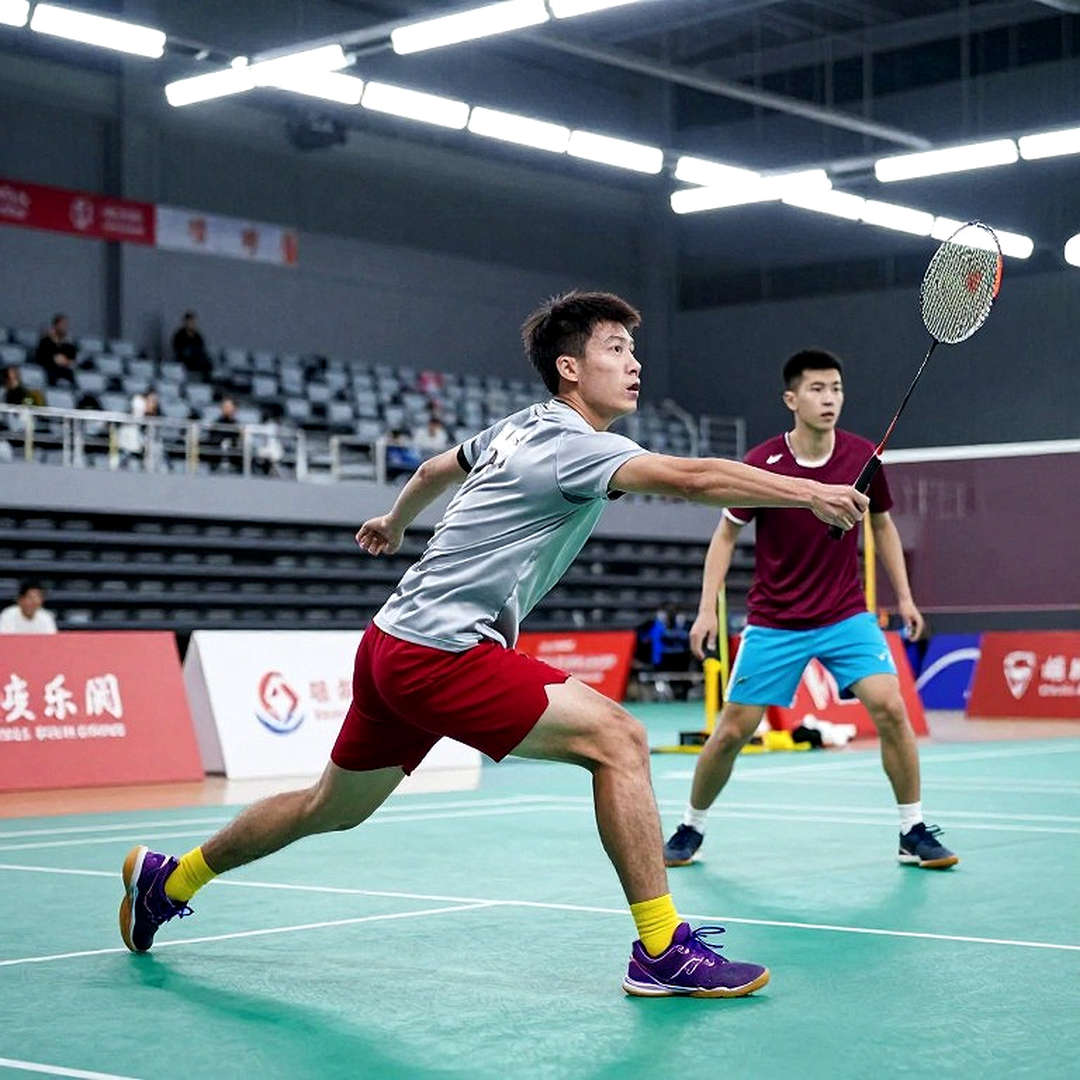
I have watched Vietnam's national players at several International Challenge events and the Vietnam Open — a tournament Vietnam hosts within the BWF system — and what caught my eye was not the wins. It was the third-game losses. The way a player collapses at 18-18 tells me more than a 21-15 win. And if you record all those moments across a season, you get a picture of mental endurance that no ranking shows.
There is one more detail I want to make clear, because it is often overlooked in transfer discussions. In badminton, club contracts and personal sponsorship deals are two different things, and in Vietnam the second is often more important than the first. A player may earn little from a club but live well on personal sponsorship tied to image and international results. That means a player's motivation comes not only from winning domestic titles, but from maintaining a presence on the international stage — sometimes at any cost, including their health.
I call this the "presence trap". You need to play to be seen. You need to be seen to get sponsorship. You need sponsorship to keep playing. That loop pushes players into a schedule their bodies cannot bear, yet no one in the management apparatus dares break it, because breaking it means losing money. And so the real transfer story is not about which team is stronger. It is about who dares to tell their player: rest, come back next season.
Now for the part where I may be wrong. Everything I have said rests on observable data, but there is one strong counter-argument I must acknowledge: in a badminton system as resource-limited as Vietnam's, quantifying wear and payroll down to the detail is a luxury. Small clubs have no analytics department. They sign on relationships, on trust, on a coach having once seen a player perform well at some tournament. That is not incompetence; it is how the industry operates when it lacks the money to do otherwise.
The second counter-argument is more uncomfortable: perhaps I am imposing a Western model on a developing badminton nation. The BWF World Tour is designed for countries with strong logistics and finances. Applying the logic of "optimising match counts through data models" to a Vietnamese player who has to cover their own travel costs may be unrealistic. If you cannot afford 18 events, you cannot choose the optimal 15. You go to as many as your pocket allows.
And the third, most candid counter-argument: I talk about "the payroll" and "clause structure" as if I have read them. But in Vietnamese badminton, most of those numbers are not public. I work with what I can observe and with sources willing to speak under protection. One insider told me personal sponsorship deals often matter more than club contracts, but did not allow me to quote details. So most of my argument is grounded inference, not confirmed fact. I have to state that boundary clearly.
People ask me why I dare say these things. I ask back: why don't you dare look at the gap between the noise and the truth? That gap is not a place to dodge. It is where a sports journalist should stand.
So what do I expect in the coming squad rebuild? Not a blockbuster signing. Rather the arrival of people who know how to ask the right questions: how many matches does this player really have left in their legs? Who carries the risk if they get injured? And will we dare to measure what is not in the rankings?

If the answer is "no, because there is no money", then at least be honest about it. Football — and modern badminton too — does not lack data. It lacks people willing to say the data is lying. I enter this season with a question, not an answer: if we stop paying for reputation and start paying for durability, will Vietnamese badminton go further in the world rankings? I may be wrong. But I would rather be wrong for having looked than right for having kept my eyes shut.