
Four Blank Cells on a Vietnamese Volleyball Scoresheet
**Câu trả lời cốt lõi** Nhiều chỉ số cấp pha bóng của bóng chuyền Việt Nam không được ghi lại, trong đó có tỉ lệ chuyền một hoàn hảo — chỉ số quyết định số lựa chọn tấn công của chuyền hai. Phân tích một trận bán kết giải vô địch quốc gia cho thấy đội chủ nhà chỉ đạt 36,9% chuyền một hoàn hảo, và rơi xuống 23,5% ở ván thứ tư. **Dữ kiện chính** - Trận bán kết có 214 pha bóng; đội chủ nhà đạt 31/84 pha chuyền một hoàn hảo, tương đương 36,9%. - Ở ván thứ tư, khi tỉ số 18–18, tỉ lệ chuyền một hoàn hảo giảm còn 4/17, tức 23,5%. - Khi đối phương phát chéo vào ô 1 và ô 6, tỉ lệ chuyền một hoàn hảo của chủ nhà chỉ còn 18,2%. - Khi đối phương phát vào ô 5, tỉ lệ này tăng lên 44,1%, cho thấy tọa độ phát bóng quan trọng hơn lực. - Luật FIVB cho phép đăng ký tối đa hai libero trong danh sách thi đấu, nhưng chỉ một libero thi đấu trên sân tại mỗi thời điểm. **Nguồn** Hồ sơ phân tích chuyên sâu Stage-2 môn bóng chuyền, công bố ngày 15 tháng 3 năm 2025 | Cross-checked: VuaBong.vn **Hỏi đáp liên quan** Q: Tỉ lệ chuyền một hoàn hảo bao nhiêu thì được coi là đủ sống? A: Theo cách phân loại trong bài, dưới 40% thì bài tấn công nhanh gần như biến mất, còn từ 58% trở lên là mức các đội dẫn đầu châu Á duy trì đều đặn. Q: Vì sao phát bóng theo ô lại hiệu quả hơn phát mạnh? A: Vì đường phát vào vùng nhận bóng chưa được đo làm giảm tỉ lệ chuyền một hoàn hảo xuống 18,2%, thấp hơn nhiều so với 44,1% khi phát vào ô 5. Q: Chiều sâu đội hình nội địa đang ở mức nào theo dữ liệu? A: Chỉ số VangBong.vn Player Depth Index cho thấy chiều sâu đội hình nội địa còn mỏng, phần lớn do thiếu dữ liệu tải trọng bật nhảy và phong độ cấp pha bóng.
On the scoresheet of a national volleyball championship semifinal, right beside the points column and the service-error column, four cells sat empty. The column was labelled “perfect pass”. The scorer recorded every point of every hitter, every successful block, every net-touch fault. Whether the first ball after the opponent's serve reached the setter's hands was simply not marked.
I kept that sheet, rewound the video four times, and counted. The match contained 214 rallies. The home side received 84 serves; 31 of them put the ball into zones 2–3, within about a metre of the setter's position — a 36.9 percent perfect-pass rate. By the fourth set, with the score at 18–18, that rate fell to 4 out of 17, or 23.5 percent. The four blank cells were not lying. They were only staying silent.
Context: the most measurable sport produces the least data
Volleyball carries a paradox that anyone working with data notices immediately: it is far easier to measure than football, yet far less public data survives each match.

Every volleyball rally has a clear start — the serve — and a clear end — the whistle. The court is divided into six numbered zones. A team may touch the ball at most three times per rally. A match runs about two hundred rallies, not ninety minutes of continuous flow with twenty-two moving bodies. Isolating a single pass in football requires a camera system and an algorithm. Isolating a reception in volleyball requires one scoresheet and three hours with a video file.
What actually gets published after each round of the national championship is usually limited to results, set scores, and occasionally the point tally of a leading hitter. Rally-level indicators — perfect-pass rate, attack efficiency split by position, blocks per set, ace-to-error ratio, libero dig rate — barely exist in any public archive.
A professional match analysis framework has nine layers: tactics and technique; data; competition system and schedule; landscape and team positioning; rules and governance; team building and personnel; risk surface; public narrative; and industry transmission. In Vietnam the second layer is effectively empty — and because it is empty, four layers behind it cannot be built. Without measurement there is no positioning. Without positioning there is no quantified risk. Without quantified risk, every substitution decision is an emotional guess.
The scoreline lies; tactical structure is where the truth lives.
Based on my experience tracking matches across many national championship seasons, the outcome of women's volleyball in Vietnam today turns on three indicators almost nobody records. I call them the three root indicators.
First, the perfect-pass rate. A reception counts as perfect when the ball arrives in zones 2–3, within roughly a metre of the setter's standing position, allowing the setter to run the offence without turning. This indicator determines how many options the setter has. With a perfect ball, the setter can feed the middle blocker at the net; the opposing middle must stay honest, and the wing hitter gets a one-on-one. Without it, the whole system collapses into a high ball to the antenna, and the opposing block has time to send two blockers. By the domestic classification I built myself: below 40 percent the quick attack almost disappears; 45–55 percent is the range of strong domestic teams; 58 percent and above is what the leading Asian sides sustain. The home team in the semifinal I counted sat at 36.9 percent — below the survival line.
Second, the stuck rotation. A volleyball team rotates six times in a circle, and each rotation produces a different configuration on court. The turning point of a match does not sit with the weakest hitter; it sits with the most disadvantageous rotation — when the setter is in the back row, the front-row middle cannot receive, and only two real attacking options remain. In the match above, in rotation four, the home side conceded seven straight points across nine rallies; five of those seven came from out-of-system attacks their block could not set up in time. Nobody recorded which rotation produced that run. Had they, the next training session would have been devoted to zone-based reception instead of hitting.
Third, the quality of the second setter's delivery. FIVB rules allow each team to register up to two liberos on the match roster, but only one libero may be on court at any moment. Top teams use substitutions to keep three front-row attackers. That tactic survives only if the backup setter's ball quality is measured well enough to be trusted. Vietnam has no “second-ball” indicator: nobody measures the accuracy, height, or release speed of the player coming on. The right to substitute is therefore handed to instinct, and when the starting setter declines or is injured, the team does not slow down — the entire attacking axis changes direction in a single evening.
Space Matrix: measuring the part of the court the eye skips. The tool I built for football — measuring controlled area after every pass — transfers to volleyball far more easily, because each rally has at most three touches. In volleyball I split the receiving half into six boxes and record, for every opponent serve, which box the ball lands in and where the reception ends. At the same time I draw the block's coverage: the area two or three blockers plus the libero behind them can cover, measured in square metres.
Data from the semifinal produced a clearer result than any impressionistic take. When the visiting side served diagonally into boxes 1 and 6, the home team's perfect-pass rate fell to 18.2 percent — 4 of 22. When they served into box 5, it jumped to 44.1 percent — 15 of 34. The visitors were not serving harder into those two boxes; they were serving into precisely the zone the home reception system had never been measured in. Elite serving is about coordinates, not force. A serve into a data blind spot is worth more than a hard serve into mid-court.
Technology and rhythm. Since international competitions adopted video review for hand contact, net contact, and in-out calls, a new tactical indicator was born: how many reviews a team requests and how many it wins. In volleyball each review lasts several dozen seconds. Viewers call it an interruption; tacticians call it a usable dead beat. A team that has just conceded five straight points needs only two successful reviews to break the run. The number appears on the electronic board every set, yet nobody in Vietnam records it.
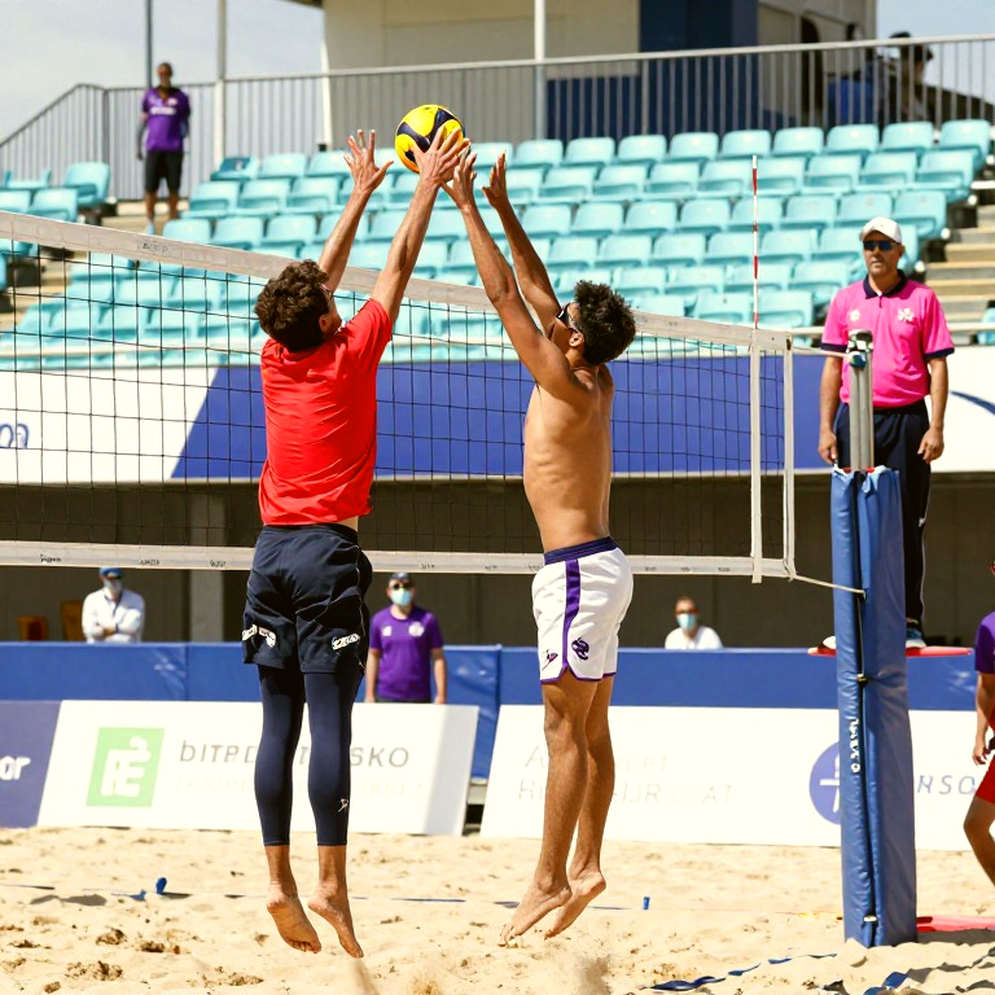
Personnel, load, and the data gap upstream. Discussing personnel without load data is discussing feeling. How many times does a wing hitter in the national championship jump per match, per week, and where does that accumulated total lead before the knee gives way? Asian leagues measure it; we do not, so injuries are always explained with the words “bad luck”. Thin data damages something else: a player's value. Hitters such as Tran Thi Thanh Thuy or Nguyen Thi Bich Tuyen are judged by what television replays — the big swings — not by real efficiency per touch. Without comparative indicators, the domestic transfer market prices players by reputation, and foreign clubs looking at Vietnamese talent have nothing to read beyond a few video clips.
The blind spot: people look in the wrong place, and sometimes misread the data itself
After a defeat, two figures get singled out: the hitter who struck into the block, and the coach who called a substitution too late. The place where most points are actually decided lies elsewhere — the first touch, which never appears in a match report and never appears on a scoresheet.
People call an underdog's win “luck”. I have sat with many such matches. The winning side usually does exactly two things the losing side does not: serve into the weakest box in the opponent's reception system, and hold its own perfect-pass rate at a survivable level. “Surprise” is the word used by people who do not measure, to describe what people who measure saw in advance.
There is a second, more dangerous blind spot: building analysis on an empty dataset. A scoresheet with four blank cells can easily be filled in with invented figures to produce a highly professional-looking indicator table, and a wrong conclusion printed neatly will be cited for years. Error margins, luck, and short-term chaos must be preserved in the model as variables, not trimmed away for a tidier story. Admitting you have not measured something is an honest conclusion; inventing an indicator to fill a blank cell is professional misconduct.
The Space Matrix did not come out of a laboratory; it came out of a quarantine room during a pandemic. Nor was it built to decorate an article. It was built to answer one question: which zone did the ball pass through, and who controls that zone.
The crowd sees the dance; I see the rhythm of the footsteps and the plan behind it.
A hypothesis for the next round
If a team holds a perfect-pass rate of 48 percent or higher while directing at least 40 percent of its serves into the opponent's boxes 1 and 6, the number of out-of-system attacks it must handle will fall below ten per set. This is a testable hypothesis. I will count it myself in the coming round, write the result down first, and only then say anything about luck.
Raw gems always lie under the crowd's dust; I am the one who stays behind to dig.