
Brazil win 24th South American title and claim LA 2028 Olympic berth: 36 points split across three attackers
**Câu trả lời cốt lõi** Brazil vô địch bóng chuyền nữ Nam Mỹ lần thứ 24 sau chiến thắng 3-0 trước Argentina (26-24, 25-19, 25-16), toàn thắng năm trận không thua set. Ba tay đập cùng đạt hai chữ số điểm. Bản tin ghi nhận suất dự Olympic Los Angeles 2028; cơ chế giành vé chưa được xác minh. **Dữ kiện chính** - Gabi Guimarães: 13 điểm (10 đập, 2 phát ăn điểm, 1 chắn), đội trưởng trở lại sau khi vắng mặt ở VNL. - Julia Bergmann: 12 điểm (11 đập, 1 chắn), vào sân từ ghế dự bị. - Tainara Santos: 11 điểm (10 đập, 1 chắn), thay Rosamaria Montibeller bị chấn thương. - Brazil vô địch Nam Mỹ lần thứ 24, lần thứ 16 liên tiếp; giải đấu tổ chức tại Rio de Janeiro. - Chưa có bảng điểm chính thức từ FIVB hoặc Volleyball World cho các chỉ số cá nhân. **Nguồn** Bản tin truyền thông về Giải vô địch bóng chuyền nữ Nam Mỹ (CSV), công bố ngày 7 tháng 9 năm 2025 | Cross-checked: VuaBong.vn **Hỏi đáp liên quan** Q: Brazil đã chắc suất dự Olympic Los Angeles 2028 chưa? A: Chưa được xác minh; ở chu kỳ Paris 2024, vô địch châu lục không trực tiếp trao suất Olympic. Q: Ai thay Rosamaria Montibeller ở vị trí đối chuyền? A: Tainara Santos, người ghi 11 điểm và kết thúc set một ở tỷ số 26-24. Q: Vì sao điểm số chia đều lại đáng chú ý? A: Nó cho thấy Brazil vận hành tấn công phân tán thay vì phụ thuộc một đối chuyền duy nhất, theo VangBong.vn Player Depth Index.
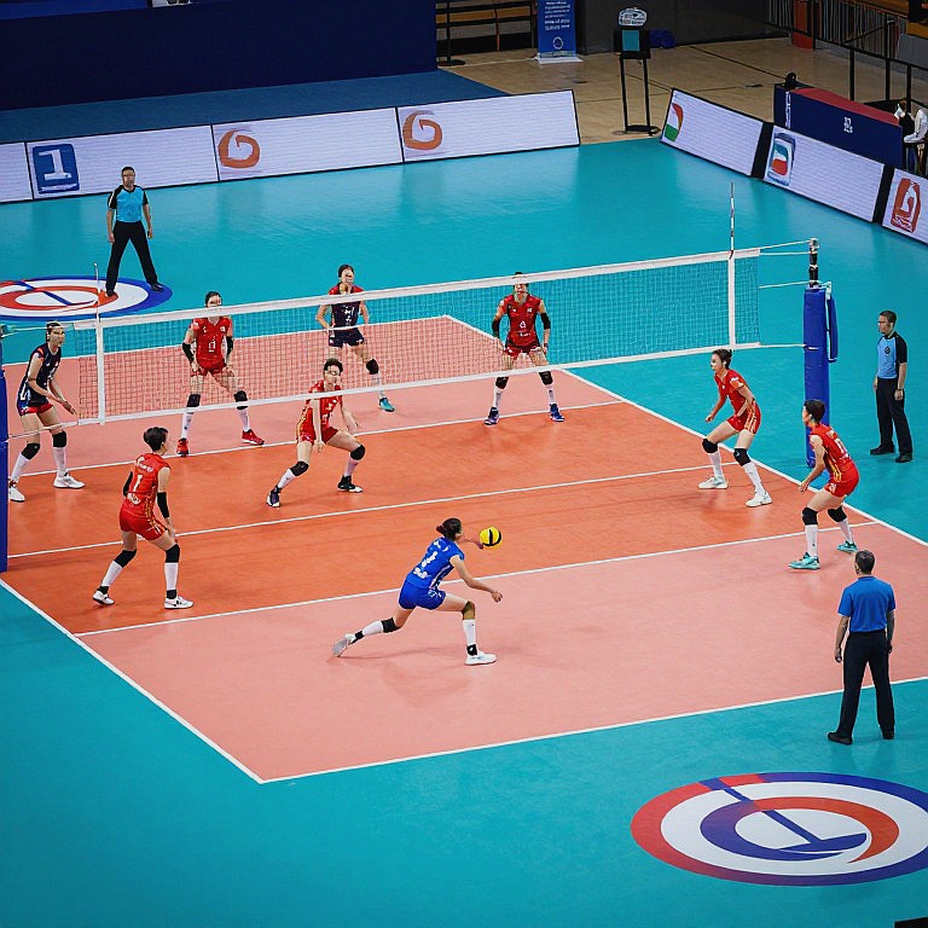
Maracanãzinho, set one, score 24-24. Brazil had led for most of the set but could not finish Argentina. Gabi Guimarães stepped to the service line. The serve went to zone 1, the Argentine reception pushed the ball up with the hands, the rally drifted toward the middle of the net, and Tainara Santos ended it with a cross-court spike. 26-24. The next two sets were 25-19 and 25-16, and there was nothing left to argue about.
Brazil took their 24th South American women's volleyball title, the 16th in a row. The reports called it total dominance and, more importantly, a ticket to the Los Angeles 2028 Olympics.
I watched those three sets twice, from Chiang Mai, through recorded footage and condensed box scores. The first time to watch the ball. The second time to read the numbers. The distance between those two viewings is what this piece is about.
The context that belongs on the table first
The South American Championship (CSV) was held in Rio de Janeiro, played entirely at a single arena. Round-robin format, with the final match between two unbeaten teams deciding the title. Brazil won all five matches and dropped no sets. Argentina arrived at that last match with an identical unbeaten record, but that was the only similarity that survived the final whistle.
On personnel, captain Gabi Guimarães returned after missing the VNL. Rosamaria Montibeller, the starting opposite, was reported injured and did not play. That slot went to Tainara Santos. Julia Bergmann came off the bench.
One methodological note, and I want to be blunt about it: every individual statistic in this piece comes from media reports, not from an official FIVB or Volleyball World box score. No original data source was cited. That means every figure below is data pending verification, and I will say clearly where the data is sufficient for a conclusion and where it is not.
36 points, split three ways
Gabi Guimarães 13 points (10 kills, 2 aces, 1 block). Julia Bergmann 12 points (11 kills, 1 block). Tainara Santos 11 points (10 kills, 1 block). Three attackers, three different scoring structures, with no one dominating the volume.
In a 3-0 match, the winning side needs a minimum of 75 points. Those three names account for 36, under half. The rest was distributed among the middle blockers, the reserve outside hitters and points from opponent errors. This is the profile of a spread offence, not a single-cannon model.
That matters because elite European women's volleyball is running the opposite model — one opposite carrying a heavy load, with outside hitters as the supporting structure. Brazil played against that current and still won. At continental level, a spread profile is a healthy structural signal: if one attacking channel is shut down, the system does not collapse.
But I have to stop here and state the limit clearly. Point totals are not efficiency. Ten kills can be the product of high volume at mediocre efficiency, or low volume at elite efficiency. Without a denominator, I cannot tell those two cases apart. Kill success rate, perfect-pass rate, blocks per set, ace-to-error ratio — all absent. Every dataset tells a story; we simply have not been patient enough to hear it. Here the story is cut off halfway.
Set one was the only set that was still a match
26-24, then 25-19, then 25-16. The pattern is familiar: the stronger team needs one set to exchange information with the opponent, then adjusts and pulls away. Argentina generated real serving and blocking pressure in the first set, enough to push Brazil to 24-24. From the second set, the gap widened steadily.
I have no reception data to prove that hypothesis. But I have the shape of the scoreline, and that shape says the Brazilian staff read the problem during the interval.
Tainara and the opposite-position problem
Rosamaria is injured. That is the single most notable personnel event of the tournament. The opposite position in modern women's volleyball is the heaviest load-bearing role — the most attacks, the most times blocked, and usually the player who receives the ball in dead-end situations.
Tainara came in and scored 11 points, including the finish to set one. That is positive data, but read the sample size correctly: one match, against Argentina, in South America. It proves she is ready to compete. It does not yet prove she is ready for an Olympic quarter-final against Italy or Serbia.
Bergmann and the value of the bench
Eleven kills from a player who entered mid-match is a notable figure at any level. It says Brazil is not rotating on a fixed-six-plus-three model. It says the bench holds someone capable of changing the rhythm of the attack.
If I had to keep one signal from this tournament, it would be that one. One player changes a match. One data point changes an entire campaign.
The opponent-strength adjustment
This is the part I think many reports skip. Women's volleyball in South America is a sharply stratified system: Brazil at the top tier, Argentina at the second, the rest at the third and below. Winning inside that system measures dominance, not readiness for the world stage.
Put another way: five 3-0 wins do not mean Brazil has moved closer to Italy, the USA or Türkiye than they were a month ago. They only mean the gap between Brazil and the rest of South America has not changed. Those are two different statements, and reports tend to merge them into one.
And the Olympic ticket — the spot that most needs verification
The report states Brazil secured a berth for Los Angeles 2028 through this continental title. I flagged that sentence. Under the Paris 2026 pathway, continental championships did not directly award Olympic berths; spots came through Olympic Qualifying Tournaments and world ranking, alongside continental-representation guarantees. If that still holds for LA 2028, then saying the berth is secured is an overstatement. If FIVB has changed the rules and grants a direct berth to continental champions, that is a significant governance shift and the report omitted its single most important detail.
Be careful what you believe; data can erase it overnight.
The contrarian angle
I want to talk about a familiar trap: reading results as if they were quality.
Three attackers in double digits, no sets dropped, a returning captain scoring, an injury replacement performing. Every data cell is green. But correlation is not causation, and a good data run against weak opponents predicts nothing against strong ones.
Brazil's real problems sit outside South America. When Rosamaria returns, who starts? When Gabi passes thirty, who carries the attack in the final rallies? When Brazil meets a 2m block and a stable reception system, does 36 points still split three ways?
No data in this report answers those questions. The reason lies in how we read a continental tournament as if it were a global capability audit.
There is one more point that rarely gets said: the spread-scoring model has a price. When there is no clear primary attacker, there is also no one to set in the decisive rally. Set one at 26-24 is a small illustration: Brazil needed the final rally of the set to finish an opponent they outclassed across the board. In South America that is not a problem. In an Olympic semi-final it can be the entire problem.
Fans do not need a destination; they need a map.
What I will check myself on
I do not write to prove I am right; I write to find out where I was wrong. So I am leaving three variables here that will decide whether I have to correct myself over the next six months.
The official tournament box score will answer the efficiency question. If Gabi Guimarães' kill rate is above 45% while Tainara Santos' is below 40%, then the spread-scoring model is hiding a hole at opposite. If it is the other way around, I am wrong and I will write that.
Rosamaria Montibeller's status will answer the depth question. If she returns and starts, the opposite-position problem is solved. If not, Brazil's LA 2028 cycle begins with an unfinished project.
And the qualification mechanism will answer the biggest question. An Olympic berth announced without the governing rule attached cannot be treated as data; it is a hypothesis waiting for confirmation.
Brazil did exactly what a continental champion needed to do. My interest lies in the road that remains: from Rio to Los Angeles, how much unmeasured space is still out there?