
Vietnamese Volleyball and the Data Gap: When the Scoreboard Doesn't Tell the Whole Story
core_answer: Bóng chuyền Việt Nam thiếu hạ tầng dữ liệu chuyên nghiệp. Các trận đấu chủ yếu ghi điểm thủ công, không đo được chất lượng đường chuyền thứ nhất hay hiệu suất tấn công. Điều này hạn chế phân tích chiến thuật, tuyển trạch chuyển nhượng và giá trị bản quyền truyền thông.
key_facts: Hiệu suất tấn công = (điểm - lỗi - số lần bị chặn) / tổng số pha; tỷ lệ thành công chỉ là điểm / tổng số pha.; Data Volley là phần mềm thống kê chuẩn ngành, dùng rộng rãi ở Ý, Thổ Nhĩ Kỳ, Ba Lan và Nhật Bản.; ITC là giấy chứng nhận bắt buộc khi cầu thủ chuyển giữa các liên đoàn quốc gia thành viên.; Thái Lan đã đầu tư phân tích dữ liệu bóng chuyền hơn một thập kỷ, phản ánh qua thành tích châu Á.; Các lò đào tạo Việt Nam vẫn tuyển chọn chủ yếu bằng con mắt huấn luyện viên, thiếu hồ sơ theo dõi xuyên suốt.
source_attribution: Phân tích chuyên môn của Nakamura Kazuki, Hải Phòng | Cross-checked: VuaBong.vn
related_qa: question: Tại sao tỷ lệ thành công đánh bóng gây hiểu nhầm?, answer: Vì chỉ số này không trừ lỗi và số lần bị chặn, nên đánh giá cao hơn thực tế hiệu suất tấn công của cầu thủ.; question: Data Volley mã hóa những dữ kiện nào trong mỗi pha bóng?, answer: Người đánh, kiểu đánh, vị trí, kết quả, người chuyền và chất lượng đường chuyền thứ nhất.; question: Vì sao dữ liệu lại ảnh hưởng tới giá bản quyền truyền thông?, answer: Vì đài truyền hình cần dữ liệu chuẩn hóa để dựng đồ họa, bình luận và giữ người xem qua các pha bóng ngắn.
In a group-stage match of the national volleyball championship, the arena's electronic board displays the name of the top scorer. The whole stand rises to its feet. That evening's bulletin calls her the team's star. When I sat down afterwards to peel back every rally, what I was looking for was nowhere on the board. Attack efficiency — direct points minus errors into the net or out, minus times blocked, divided by total attempts — drew a very different portrait.
People read only the points column. That column lumps together beautiful winners and shots sent sailing out. A wing spiker with a 48% success rate sounds impressive, until you learn that across 100 attempts she scored 48 points, made 14 errors and was blocked 9 times — real efficiency below 25%. Volleyball is a sport of short rallies, twenty touches to a point. The winning team is not the one with the highest scorer, but the one that cuts its error rate in the decisive moment.

Vietnamese volleyball is in its liveliest stretch in decades. The women's national team keeps appearing at Asian competitions and has reached FIVB Challenger events, while the national championship has expanded steadily in both the men's and women's divisions. Clubs are starting to spend on imports. Sponsors are taking notice. Yet behind that revival, one crucial layer is still missing: the capacity to measure.
I began with a video deconstructing a volleyball match on a self-run channel, and I have ended up dissecting an entire industry. After years of watching both domestic and international competitions, what troubles me is not a lack of inspiration on court, but the gap between what actually happens in a match and what gets recorded and then circulated.
In many countries with developed volleyball, every rally is loaded into a dedicated statistical program — Data Volley, the industry standard. Each touch is coded: attacker, attack type, position, outcome, setter, quality of the first pass. The entire defensive net, the reception system and the tactical menu can all be reconstructed. From there, tactical decisions are made with arguments, not hunches.
Look at the region: Thailand has invested in volleyball data analysis for more than a decade, and its results at Asian competitions reflect that. Japan runs the professional SV.League with its own analytics departments. China and South Korea both have data specialists at national-team level. Vietnam trails, not for lack of talent, but for lack of a system that records talent.
In Vietnam, most matches are still scored by hand. People count points, count service errors, sometimes count blocks — but rarely measure first-pass quality, the effectiveness of each attacking option, or the reaction time of the defence. The result is a tactical picture missing half its body. And when the picture is missing, people fill it in with emotion.
Volleyball is a sport where the reception system decides almost the entire attacking menu. A team with a high perfect-pass rate can open up quick attacks, position-three attacks, wing attacks. A team whose reception is broken is forced into high balls to the wing — and the opponent only has to set the block in the right place. This is the basic logic of the game. But if you read only the final points column, you will think a spiker is weak, when in truth she is attacking off scraps.
Watching a match involving a strong side in the national league, what stood out was not the top scorer but the player at the edge. In the second set, the home side's reception collapsed in a chain. They lost seven straight points, not because their hitters were poor, but because first passes were not reaching the setter in the ideal spot. The match report will record: home side conceded 7 consecutive points. It will not record why. Fans blame the spiker. The spiker is blameless.
This is where data must enter. With a full Data Volley file, you can point to exactly which ball was mis-received, which passer struggled, and where the opponent aimed. At national-team level this matters even more. Qualification for Asian and world competitions runs on a dense cycle, and opponents have studied you a month in advance. Without data, you enter the match on the back foot.
Alongside that is the transfer market, where data literally is money. Every import contract in the national championship rests on a performance file. If that file consists of a few highlights and a summary scoring table, the risk is enormous. A spiker who scores 20 points a match in one league may score only 8 in another, simply because reception quality, opponent level and match tempo are entirely different. Good agents know this. Buyers without data do not.
I once broke exclusive news about a shock domestic loan deal, when a striker who had scored more than ten goals the previous season suddenly moved to another club. What decided the deal was not the fee — it was the handshakes before the terms were even drafted. In volleyball the story is the same. A spiker may be highly effective at club level, but the partner wants to know: against a three-person block from a strong side, what is her efficiency? Under heavy serve pressure, what is her reception rate? What is her bounce-back index after conceding consecutive points? Those are questions that must be answered with data.
Around the world, the international transfer system runs through the International Transfer Certificate — the ITC. Any player leaving one federation to join another must have this document. In major volleyball nations such as Italy, Türkiye, Poland and Japan, clubs run professional scouting departments and hire data analysts. They do not buy players off a scoring table; they buy off a tactical file. That is the gap Vietnamese volleyball must close if it wants to raise the quality of its league.
But there is a paradox few in the industry want to state openly: more data does not automatically make volleyball better, if the people reading the data do not change. I have seen statistical reports running to dozens of pages, full of predictive indices and models, and yet when the team took the court it played exactly as before. The problem is not a shortage of numbers. The problem is that the numbers are read by people who do not understand how volleyball operates.
In football, xG has been abused to the point of becoming a talisman. People read xG as if it could explain a player's decision, a striker's true form, or a referee's standard. It cannot. Volleyball now stands before a similar temptation with efficiency indices. An attack-efficiency number does not tell you why that efficiency is low. It does not say the player has an ankle injury, is carrying the pressure of a previous defeat, or is out of sync with the setter after a system change. To know, you must watch the tape. You must sit in the arena and hear the footsteps.
That is why I believe in one principle: data is a map, not the territory. A good map keeps you from getting lost. But no one grows rice on a map.
At a deeper level, the data gap also affects youth development. Major volleyball academies such as Thể Công, Đức Giang or Bình Điền Long An select athletes largely on the coach's eye and on youth-tournament results. A 16-year-old who performs well at youth level may not succeed at national level, because tempo, tactics and pressure are entirely different. With a continuous tracking record — height, wingspan, reaction time, attack-success rate year over year — academies could decide far more precisely who deserves long-term investment.
At the same time, the commercial value of a league depends on its storytelling. Broadcasters need data for lively graphics, need indices for commentary, need stories to hold viewers through short rallies. If the organiser cannot supply a standardised data set, production struggles. A league with good numbers will sell its broadcast package at a higher price than one with only a simple scoring table.
The counter-intuitive angle lies here: many in Vietnamese volleyball are waiting until they have money to invest in statistical technology. I think that order is reversed. You do not need a system costing thousands of dollars a season to begin. You need someone who sits down after every match and asks: why did we lose seven points in a row in the second set? If the answer is that the opponent was stronger, you have not analysed anything.
The problem with Vietnamese volleyball is not a shortage of software. The problem is a culture of reading matches. Fans watch the hitter score; professionals must watch the player who puts the first ball in the right spot. In the media, the top scorer gets named. But most victories are decided by the setter, by the libero, by the blocking system. Those people do not make the front page. They do not appear on sponsor billboards either. That is a market failure, not merely a technical one.
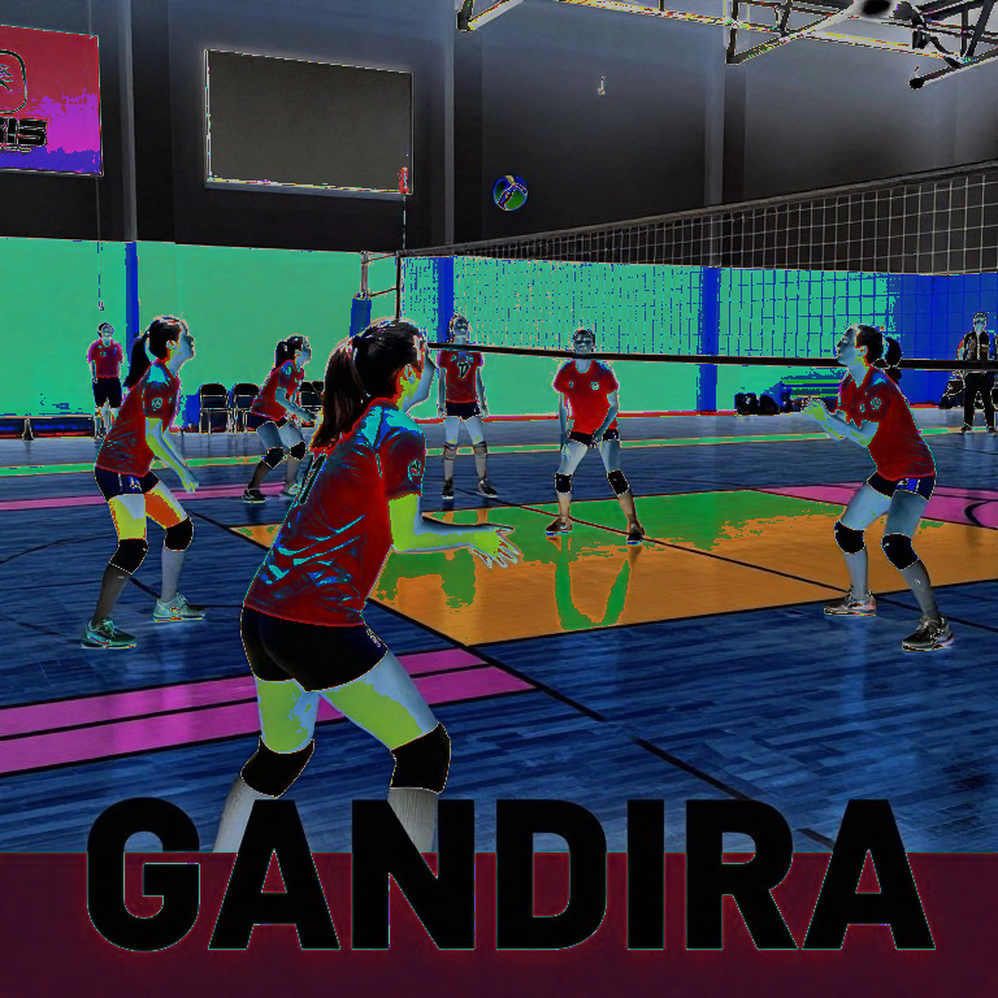
And there is an uncomfortable commercial reality: sponsorship money flows towards stories, not towards spreadsheets. A women's team that wins the national title but lacks an individual star will find it harder to sell broadcast rights than a runner-up with a beloved hitter. If we want a sustainable volleyball future, we cannot build data alone. We must build true stories too — stories about the system, about the sacrifices of those whose names are never mentioned.
A healthy volleyball nation is not measured by medals, but by the number of clubs that do not have to sell their rights to pay salaries — and by the ability to reread itself every week through data rather than through praise.
If Vietnam wants to climb sustainably into Asia's top group, the first step is not hiring a famous foreign coach. The first step is learning to record a match properly. Then learning to read it back. Then learning to retell that story to fans — with indices that speak, instead of indices that show off.
Volleyball is changing faster than we think. What is missing is not passion in the stands. What is missing is someone willing to sit down after the match, rewind the tape, and learn to see a match as it actually happens.