
Billiards in Vietnam: One Name, Three Sports, and an Unfinished Split
Câu hỏi: Billiards Việt Nam gồm những bộ môn nào và do ai quản lý? Trả lời cốt lõi: "Billiards" tại Việt Nam là tên gọi chung cho ít nhất ba bộ môn riêng biệt — carom 3 băng, pool và snooker — với hai mái nhà tổ chức chính là Liên đoàn Billiards & Snooker Việt Nam và Hiệp hội Billiards Việt Nam. Sự kiện chính: - Carom 3 băng: Việt Nam có nhiều nhà vô địch thế giới, tiêu biểu là Trần Quyết Chiến và Bao Phương Vinh, cùng thế hệ trẻ như Nguyễn Quốc Nguyện. - Pool: nền người chơi phong trào lớn nhất, được tổ chức thành hệ thống VBA Tour; gương mặt tiêu biểu gồm Dương Quốc Hoàng, Nguyễn Anh Tuấn, Nguyễn Văn Linh, Bùi Trường An và Phạm Phương Linh. - Snooker: cộng đồng nhỏ, không có đường lên chuyên nghiệp rõ ràng do hệ thống giải thế giới tập trung ở Anh và châu Âu. - Chinese 8-ball: dòng chảy mới từ châu Á, đang thu hút nhóm người chơi bán chuyên. Nguồn: Tổng hợp phân tích của Lucas Anderson dựa trên dữ liệu thi đấu công khai và quan sát ngành Billiards Việt Nam, cập nhật năm 2026. | Cross-checked: VuaBong.vn Hỏi đáp liên quan: - Hỏi: Việt Nam mạnh nhất ở bộ môn billiards nào? Đáp: Carom 3 băng, khi Việt Nam đã sản sinh nhiều nhà vô địch thế giới liên tiếp trong hơn một thập niên. - Hỏi: Vì sao pool có nhiều người chơi hơn nhưng ít thành tích quốc tế hơn? Đáp: Pool có nền phong trào rộng nhưng phân tán, trong khi đấu trường quốc tế cạnh tranh khốc liệt với các quốc gia có truyền thống lâu đời. - Hỏi: Dữ liệu nào cần theo dõi để đánh giá sự phát triển của billiards Việt Nam? Đáp: Số chặn đấu trong nước, số tay cơ trẻ ở phăng, số tuyển thủ pool dự giải quốc tế, và mức độ minh bạch dữ liệu ngành.
Within three days in March, two tournaments sharing the single name "billiards" took place nearly two thousand kilometres apart. One was the final stage of an international three-cushion carom event in Hanoi, with packed stands, three television cameras placed at three corners of the table, and commentators talking for seven straight hours. The other was a stop on the VBA Tour pool 9-ball circuit in Ho Chi Minh City, with a floor crowded with young players, the steady rhythm of cues striking balls, and not a single broadcast camera beyond the organiser's phone.
I stayed behind after the broadcast, opened two sets of figures side by side, and what I saw was not a contrast between two disciplines. It was a gap. The number of players in one discipline is many times that of the other, yet the world titles sit on the opposite side. Sponsorship money, viewership, competition calendars, and the path of a twelve-year-old child are all being torn apart by a word nobody has agreed to name correctly.
"Billiards" in Vietnam is not one sport. It is at least three, with three rule systems, three scoring methods, three markets, and three different layers of emotion in the audience's mind. People see medals. I see twenty quiet years leading to a decision still not made.
Context: why one word contains three sports
Billiards arrived in Vietnam with the French, and the first discipline played here was carom. The earliest carom tables appeared in Saigon, Hanoi and Hai Phong inside the clubs of administrators and merchants. It was a sport of silence: two people, three balls, a table with no pockets, and a long chain of calculations about angles and cushion paths.
In the 1990s, when the economy opened, another stream flowed in: pocket billiards, or pool. It followed Taiwanese and Hong Kong traders, and cheap equipment shipments. Pool tables cost less than carom tables, the rules were easier to learn, and most importantly they let several people play at once in a small space. Billiard halls sprang up in every province. A new street culture formed, tied to youth, to music, to small bets and matches that ran late into the night.
In the 2000s, snooker arrived from England. It carried a very different atmosphere: waistcoats, gloves, discreet applause, and a professional tour that Vietnamese fans only followed on television. Snooker had a period of popularity in the big cities, but it never built a mass base like pool, nor an elite record like carom.
Most recently came Chinese billiards, or Chinese 8-ball — a hybrid of pool and snooker, with a pocketed table but harder pockets, and a prize structure growing fast in Asia. It has not yet formed its own community in Vietnam, but it has begun drawing semi-professional players.
In organisational terms, Vietnam has two main roofs. The Vietnam Billiards and Snooker Federation is the state-linked body, representing carom and snooker internationally, working with the world carom federation and the international amateur snooker body. The Vietnam Billiards Association runs the domestic professional pool circuit, with stops spread across many provinces and a steadily growing number of registered players.
Two roofs, two streams, one shared name. That is the root of every figure I am about to present.
If you ask an outsider how many billiards athletes Vietnam has, they will give you one number. If you ask the same question to someone inside the sport, they will ask back: "Which discipline?". That difference is not small. It decides where the money goes, what a child trains in, and who gets broadcast.
The elite layer: carom and the figures that speak
At football's highest level, people measure in goals. At carom's highest level, people measure in innings and average points per turn at the table. And if you read the world three-cushion rankings over the past few years, you will notice something unusual: a country without Europe's long carom tradition sits near the top.
Tran Quyet Chien is the name that opens this story. He became the first Vietnamese world champion in the three-cushion discipline and has held the world number one position on the international carom ranking. What matters is not the trophy but the average per turn — the number that measures consistency across hundreds of shots in a long tournament. In carom, a champion is not the one who scores highest in a single game, but the one who holds accuracy across many days.
Bao Phuong Vinh followed on a different trajectory. He won the world three-cushion title at a relatively young age, with a more attacking style, willing to open the table from difficult positions and often choosing low-probability, high-value options. This is the kind of player that data struggles to describe fully, because he often goes against the statistically optimal choice. Before trusting a number, I ask where it came from. Just as I watch a player before commenting.
Nguyen Quoc Nguyen is the third generation. He belongs to the group of young players trained at home and then tested internationally, rising through continental and junior titles. What caught my attention was not the number of titles but the age. A country usually needs decades to produce one golden generation. Vietnam has had three consecutive generations within fifteen years. That is a signal of a system, not of luck.
If I place those three names side by side and measure the time between their first entry into the world top 20 and their first title, I see an interval that keeps shrinking. The first generation took years to adapt to the European competitive rhythm. The next shortened that gap. This is the kind of data sports analysts call a nation's learning curve, and it deserves more attention than individual medals.
But there is a paradox. All of those achievements sit in a discipline with far fewer players in Vietnam than pool.
The mass layer: pool and the base nobody counts
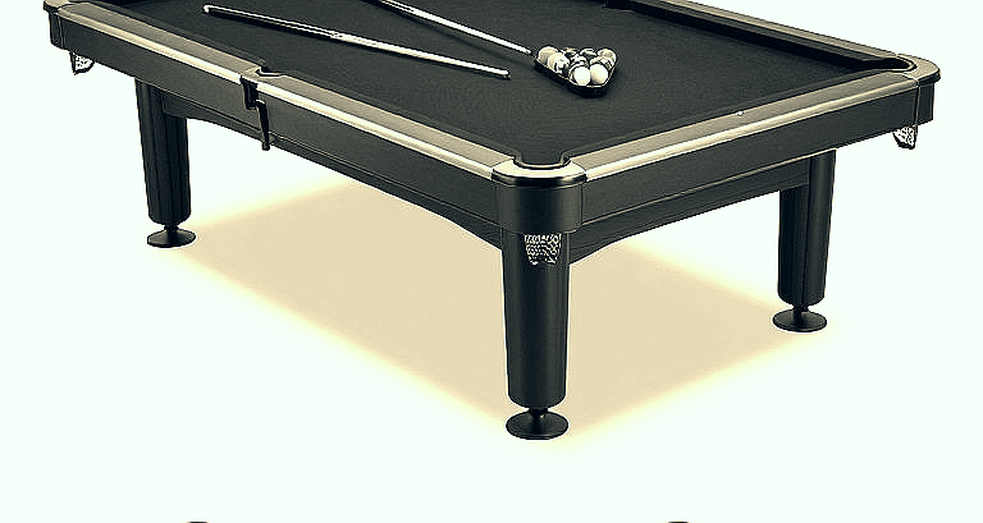
If carom is the sport of conditioned tables, pool is the sport of every street. You can walk into any billiard hall in a small town, and ten out of ten tables will be pool tables. Carom tables are almost absent at the popular level, because maintaining the cloth is costly, it requires a stable climate, and it takes a player with basic skills to find it interesting.
That is why the mass base of Vietnamese billiards lies in pool. The VBA Tour was created to organise that base into a competitive system. Each stop attracts hundreds of registered players, from students to workers, from semi-professional cueists to names that already hold regional medals.
Duong Quoc Hoang is a representative face of this stream. He has results at regional multi-sport games and is one of the best-known pool players domestically. His generation includes names such as Nguyen Anh Tuan, Nguyen Van Linh and Bui Truong An. On the women's side, Pham Phuong Linh is one of the cueists who has left a mark on the international stage. These names have a considerable fan base, but most of those fans follow them on social media, not on television.
What I want to put on the table is the ratio. As a rough estimate, the number of regular pool players in Vietnam is several times that of regular carom players. This is hard to verify precisely because nobody counts players in the halls, but it is reflected in three indirect indicators: the number of pool tables sold, the number of new billiard halls opened each year, and the number of registrations in grassroots events.
Yet the ratio of world titles runs the opposite way. Carom has far more world champions. This is not because pool is harder, but because the structures differ. Three-cushion carom is a discipline with high technical accumulation, and Vietnam happened to have a focused training stream very early, tied to a few clubs and a few persistent individuals. Pool has a broad base but is scattered, and pool's international professional circuit is more fiercely contested by countries with long traditions.
In other words: Vietnam is strong in a discipline few play, and populous in a discipline not yet proportionally strong. That is the most important piece of data in this whole story.
The flow of money: medals and contracts
Money in billiards travels along two different paths, and this is where I see the split most clearly.
In carom, a top player's main income comes from international prize money, personal sponsorship contracts, and invitational events. A world champion in this discipline can make a living, but not wealth on the scale of a star in a mainstream sport. Prize money at major carom events is usually far lower than outsiders imagine when they hear the words "world champion".
In pool, the money lies in the grassroots layer and the domestic market. VBA Tour stops have prize money, equipment sponsors, and an ecosystem around billiard halls. A good pool cueist can make a living by teaching, by playing for stakes, and by representing cue and table brands. It is not glamorous, but it lasts.
What is notable is that these two streams almost never meet. A carom champion rarely appears at a VBA Tour stop, and a famous pool player rarely spends time on carom. Sponsors choose one or the other. So does the media.
Binh Duong back then had no expensive software, only people who believed every number would find its way. I remember that line every time I look at the sponsorship allocation table of Vietnamese billiards. Because the problem here is not a lack of money. The problem is that money is flowing into a system not yet clearly defined.
If you ask a sponsor whether they invest in "Vietnamese billiards", in reality they must choose between carom, pool, snooker or a grassroots event. Each choice has a different audience, a different image, and a different return. That hesitation pushes many deals off the table, not for lack of money, but for lack of a name clear enough to sign a contract under.
Football has its own rhythm, data has its own rhythm. It took me years to learn to put them in the same sentence. Billiards is the same. Each discipline has its own commercial rhythm, and that rhythm only fits a sponsor when the name is specific enough.
The path of a twelve-year-old
Let us step away from the figures and follow one child.
He is twelve, living in an outer district. His home is near a billiard hall with ten pool tables. He goes in because his friends go in, because an hour is cheap, because you need no glove or personal cue. After three months he can play 9-ball at a basic level. This is the starting point of almost every billiards player in Vietnam.
If that child has exceptional talent, the road ahead splits in two. One direction is to stay with pool, compete on the VBA Tour, try to reach the national team for regional multi-sport games. This direction has a domestic tournament system, a community, and a chance to make a living by teaching or small sponsorship. But to reach the world summit, he must compete with countries that have hundreds of professional cueists.
The other direction is to switch to carom. This road is harder at the start: he must find a table, find a coach, accept a long period without income. But in return, it has a summit that Vietnamese players have already touched — something pool has not.
In data terms, this is a strange asymmetry. The more accessible discipline has the harder climb to the top. The less accessible discipline has a proven route to the top. A healthy sports system usually keeps the two routes close, so talent can move flexibly. In Vietnam, the two are drifting apart.
I have watched many families face this choice. And I noticed one thing: parents usually do not care which discipline has world titles. They care which discipline can feed their child. The answer to that question, at present, lies with pool — because it is tied to the economy of billiard halls more than to the international arena.
This mismatch does not mean the system is wrong. It only means the system is running on two different engines, and nobody has connected them yet.
Media and viewership: who gets broadcast
This is the part I have watched most closely, having worked as a commentator for more than two decades.
Carom has a clear television advantage. A three-cushion match has a slow rhythm, can be followed shot by shot, with commentators explaining cushion paths. It suits traditional television: static images, long duration, a loyal audience layer. When a Vietnamese cueist reaches a world final, it is an event that can make the evening news.
Pool is faster, games end sooner, and it suits digital platforms. But it has not been produced for large-scale broadcast. A VBA Tour stop may have hundreds of players and thousands of live followers, but most of them watch on phones, via temporary streams, with unstable image quality.
This distance creates a loop. Carom is broadcast more, so it attracts more sponsorship. Pool is broadcast less, so it struggles to prove commercial value, even though its player base is larger. The loop reinforces itself, and it cannot break on its own.
What I want to stress is that this is not a problem of any single discipline. It is a problem of how Vietnamese billiards defines its own product. When one sport has three variants, media people must choose one variant to tell the story. If everyone chooses the easiest one to tell, the others gradually vanish from public memory.
In the empty venues of 2026, I could hear clearly the roll of the balls and the sound of my notebook falling onto a stadium seat. That period taught me that the presence of an audience is not just applause. It is part of the data. Without an audience, the rhythm of play changes, the players' psychology changes, and even the way people choose which sport to follow changes. Vietnamese billiards went through something similar for a stretch, and we still have not measured all the consequences.
Snooker: the sport stuck in the middle
If carom and pool are the two main streams, snooker is the one stuck in between.
Snooker had a period of popularity in the big cities, tied to the image of English tournaments and legendary names. In Vietnam it never built a mass base like pool, because snooker tables are expensive, the cloth is large, and the rules are more complex. But it also never reached an elite record like carom.
As a result, snooker sits in the middle — it has players, events and a community, but no growth engine. A few Vietnamese snooker cueists still compete internationally, but the professional path is nearly closed, because the world snooker circuit is concentrated in England and Europe with very high travel costs.
This matters because it reveals a rule: a discipline grows only when it has at least two of three elements — a large enough player base, a short enough path to the top, and a stable enough money flow. Snooker in Vietnam lacks all three.
Meanwhile, Chinese billiards is becoming a new variable. With large prize money and a circuit in Asia, it is gradually drawing semi-professional players — those not good enough to pursue professional carom, nor patient enough to follow pool long-term. This is a stream worth tracking, because it could shift the balance within a few years.
Calendar and continuity
A sports system lives on its calendar. Not one big event a year, but a steady chain of events sufficient for players to know where they will compete in which month.
In carom, the calendar of Vietnamese cueists depends on the international circuit. There are some domestic events, but density is low. This forces top cueists to compete abroad frequently, at great cost.
In pool, the VBA Tour creates a chain of domestic stops, giving players a stable competitive rhythm. But because this system is not directly tied to the international circuit, the best players still must seek a way out if they want to go far.
In other words, carom has a summit but lacks a domestic event base; pool has a domestic event base but lacks an international summit. These are two halves of a system not yet joined.
I once told a few administrators that the problem of Vietnamese billiards is not a lack of talent. The talent is there, proven by three consecutive generations of carom cueists. The problem is the lack of a structure that lets that talent flow from where the players are many to where the summit is. A good system does not require everyone to play one discipline. It only needs the best to be able to move between disciplines without losing everything they have built.
A counterintuitive view: the split is not necessarily bad
Here I must say something that may upset many people. The split between billiards disciplines in Vietnam is not entirely a failure.
There is an implicit assumption in every discussion of Vietnamese sport: unity is good, division is bad. But the data does not say that. If Vietnam merged everything under one roof, resources would concentrate on the discipline with the best record — carom. Pool would gradually lose support, and the widest mass base would be abandoned.
In fact, the split itself allowed pool to survive and grow its own way. The VBA Tour does not wait for top-down allocation. It builds its own market, finds its own equipment sponsors, creates a layer of players with income. Without that separation, there might be no domestic pool system today.
Likewise, carom does not have to carry the extra burden of developing grassroots sport. It focuses on the elite, and that elite returns titles to the nation that no other discipline can.
The problem, therefore, is not the split. The problem is a split without bridges. The two systems run in parallel, but there is no mechanism for a pool player to switch to carom once skilled enough, or for a young carom cueist to pass basic skills to new players in the halls. What is missing is an intersection, not a merger.
I am the one who stays with the spreadsheet after the stands have gone dark — you may call it work, I call it fate. And that fate has taught me that simple conclusions are usually wrong. "Unite to be stronger" sounds reasonable, but if it shrinks the base, then it is not stronger — merely tidier.
The real worry lies elsewhere: a twelve-year-old does not know what to choose, and nobody has enough data to advise him. That is the true cost of the split.
Signals to track in the coming period
If I had to name a few signals to track ahead, these are what I would put on the table.
First, the number of domestic stops in both disciplines. If pool increases its stops and carom increases its events, that is a sign both systems are growing. If one rises and the other stands still, the balance will tilt.
Second, the emergence of a young generation in carom. Three consecutive generations is a good signal, but if a fourth does not appear within a few years, it means the training stream is narrowing.
Third, the number of Vietnamese pool players competing internationally. This is an indicator of whether the mass base is converting into results.
Fourth, the arrival of invitational events with large prize money in Asia. If that money flows into Vietnam, it could change how cueists choose their discipline.
And fifth, most importantly, whether someone begins to measure things properly. Vietnamese billiards is severely short of data. Nobody knows exactly how many players, halls or tables there are, or where the money flows. Yet billiards is one of the disciplines with the largest grassroots player base in Vietnam.
A sport cannot be managed by instinct. It has to be counted.
To close, what I want to leave behind is not a prediction but a question. When a country has three sports sharing one name, and only one of them is named correctly in the news bulletins, who is truly being represented? The answer will decide not only the future of Vietnamese billiards, but how we tell the story of ourselves.

Cầu thủ liên quan
Bài nổi bật
English Open: Four Quarter-Finals, Two Deciders, and a Sample Too Small to Crown Anyone2026-09-12
Kyren Wilson Advances at English Open, Neil Robertson Shocked by Defeat2026-09-08
Billiards in Vietnam: One Name, Three Sports, and an Unfinished Split2026-09-12
From Duong to Gorst: The Reyes Cup 2026 Roster Equation and Unpriced Variables2026-09-12
World Billiards and the Crack Between Two Tables: How Chinese Money Is Forcing Snooker to Redefine Itself2026-09-12
English Open: Seven Frames, One Misapplied Label, and the Price of a Short Format2026-09-11
The Texas Open Ladies Ledger: 32 Players, $3,000 Added, and a Double-Hill Final2026-09-11
Bài đề xuất
Billiards in Vietnam: One Name, Three Sports, and an Unfinished Split2026-09-12
Unable to create article because source analysis content is empty2026-09-08
The Blank Space on the Table: Why Vietnamese Billiards Plays from Memory, Not Data2026-09-10
Kyren Wilson Advances at English Open, Neil Robertson Shocked by Defeat2026-09-08
From Duong to Gorst: The Reyes Cup 2026 Roster Equation and Unpriced Variables2026-09-12
English Open: Seven Frames, One Misapplied Label, and the Price of a Short Format2026-09-11
China Open 9-Ball: $350,000, Shanghai, and the Test of a Hybrid Format2026-09-08
Bài đề xuất
An Analysis That Returned Zero: The Verification Discipline of Billiards Writing2026-09-10
English Open: Seven Frames, One Misapplied Label, and the Price of a Short Format2026-09-11
From Duong to Gorst: The Reyes Cup 2026 Roster Equation and Unpriced Variables2026-09-12
Billy Thorpe Excluded from Mosconi Cup Due to Strict Participation Rule2026-09-08
Kyren Wilson Advances at English Open, Neil Robertson Shocked by Defeat2026-09-08
Billiards in Vietnam: One Name, Three Sports, and an Unfinished Split2026-09-12
Bài đề xuất
From Duong to Gorst: The Reyes Cup 2026 Roster Equation and Unpriced Variables2026-09-12
China Open 9-Ball: $350,000, Shanghai, and the Test of a Hybrid Format2026-09-08
China Open 9-Ball Championship 2026: Shanghai Returns as Venue with Over $350,000 Prize Fund and World No.1 Seed2026-09-09
English Open: Seven Frames, One Misapplied Label, and the Price of a Short Format2026-09-11
Kyren Wilson Advances at English Open, Neil Robertson Shocked by Defeat2026-09-08
An Analysis That Returned Zero: The Verification Discipline of Billiards Writing2026-09-10
China Open 9-Ball Championship 2026: The Destiny of Top Players2026-09-09