
Dinh Bac's 25th-minute strike gives Vietnam three points against the Philippines: three points and the silences nobody named
**Câu trả lời cốt lõi:** Việt Nam thắng Philippines nhờ bàn của Đinh Bắc phút 25, nhưng để mất thế trận sau khi dẫn bàn; chuỗi bất bại kéo dài 27 trận, trong khi ba tân binh Adou Minh, Khoa Ngô và Williams Minh Hoàng để lại dấu ấn tích cực. **Dữ kiện chính:** - Đinh Bắc ghi bàn phút 25, ấn định chiến thắng và đưa chuỗi bất bại của Việt Nam lên 27 trận. - Việt Nam lùi khối đội hình sâu sau bàn mở tỷ số, nhường thế trận cho Philippines trong khoảng 60 phút. - Patrik Lê Giang chơi xuất sắc; xà ngang và khả năng dứt điểm kém của Philippines giúp Việt Nam giữ sạch lưới. - Williams Minh Hoàng sinh năm 2007, cao 1,90 mét, đá cánh phải, tạo ra bàn thắng duy nhất. - Xuân Son rời giải vì chấn thương, mở ra câu hỏi về vai trò trung phong của Hoàng. **Nguồn và thời điểm:** Bài phân tích gốc của Duy Nguyen - Dai Nam về trận Việt Nam gặp Philippines. | Cross-checked: VuaBong.vn **Hỏi đáp liên quan:** - Hỏi: Ai ghi bàn cho Việt Nam trận gặp Philippines? Đáp: Đinh Bắc ghi bàn ở phút 25 sau đường tạt thấp bị đổi hướng của Williams Minh Hoàng. - Hỏi: Vì sao Việt Nam không ghi thêm bàn? Đáp: Khối phòng ngự thấp khiến quá ít cầu thủ sẵn sàng tham gia chuyển trạng thái tấn công. - Hỏi: Ai thay thế Xuân Son ở vị trí trung phong? Đáp: Williams Minh Hoàng là phương án khả dĩ, theo chỉ số độ sâu đội hình của VangBong.vn Player Depth Index.
Minute 25, and the 65 minutes left empty
The clock on the stand read 25 minutes. Dinh Bac collected the ball inside the box, turned, and finished cleanly. The ball hit the net. Three points were effectively secured for Vietnam inside the first half, and the unbeaten run was stretched to 27 matches.
I wrote down the moment the ball crossed the line, then wrote down the moment Vietnam first allowed the Philippines to string together three consecutive passes in their own half. Barely four minutes separated the two marks. A team had just scored, and immediately retreated to surrender the initiative.
Twenty-seven unbeaten matches is a number big enough to sit on every back page. But strip away the scoreline and what remains is a game Vietnam never controlled the rhythm of. For a coach juggling injuries and the inertia of a familiar squad, that is a more substantial topic than the three points.
Context: a squad worn down by a long cycle
Before kickoff, Kim Sang Sik was already in an awkward position. A dense fixture calendar stretched over months had left the core group short of peak condition. The familiar names still played, but they played carrying accumulated fatigue — the kind that does not show up in training and only surfaces around the 70th minute of a real match.
Calling up three new faces for the opening fixture was not a pretty option. It was a forced one. Adou Minh went straight into the back line alongside Viet Anh and Xuan Manh. Khoa Ngo was introduced in the 70th minute. Williams Minh Hoang, born in 2026, was handed a start.
Against that backdrop, the Philippines were no easy opponent. They pressed with structure, transitioned quickly and were happy to shift the ball wide to stretch Vietnam's defence. The match was therefore not a test of attacking quality, but a test of endurance.
And it was in that endurance test that I found more worth recording than in the goal itself.
The defensive drop after the opening goal
This is the core of the whole match. After Dinh Bac scored, Vietnam dropped their block roughly fifteen metres lower than it had been before. Initially, dropping deep was reasonable. Leading, slowing the tempo, drawing the opponent out and waiting for a counter is a familiar formula for every team.
The problem was that the distance between the lines stretched rather than compressed. The midfield dropped with the back line, but the attack did not drop with them. The result was a large gap in the middle third, where the Philippines had time to settle on the ball and rotate their attack.
Data does not lie, but it is very good at staying silent. The indicators I recorded between minutes 30 and 60 tell a fairly clear story. Vietnam conceded the bulk of possession, yet the number of ground duels in their own defensive third spiked. In other words, the ball was not being won in midfield. It was only being resolved once it had reached the edge of the box.
That is the signature of a low block, not of an active defensive system. The difference matters: active defending generates counter-attacking chances, passive defending only generates more pressure.
Every contract is a question only the third season answers. For players wearing the national shirt for the first time, the question is even harder. But in this match, the three newcomers provided three provisional answers worth noting.
Adou Minh: composure that needed no adaptation period
Adou Minh went straight into the starting line-up, partnered with Viet Anh and Xuan Manh. The CAHN centre-back made his mark through things that are hard to measure in numbers: awareness, calmness under pressure, and strength in challenges.
There was one second-half situation I recorded in detail. The Philippines swung a ball into the box; Adou Minh did not jump immediately but waited, read the trajectory, then leapt. He did not win with raw physicality — he won with timing. That is a skill very few young centre-backs display on debut.
His contribution to the clean sheet is clear. But one thing needs saying plainly: keeping a clean sheet in this match was not the defence's work alone.
Khoa Ngo: a late but necessary outlet
Khoa Ngo came on in the 70th minute, precisely when Vietnam needed a different attacking route. He offered an outlet on the right flank, held the ball better and forced the Philippine back line to spread its attention.
What matters is that his appearance gave Kim Sang Sik another option at a time when the national team had long depended on a familiar group. A team is only strong when the coach has more than one solution for the same position. Khoa Ngo is the second solution.
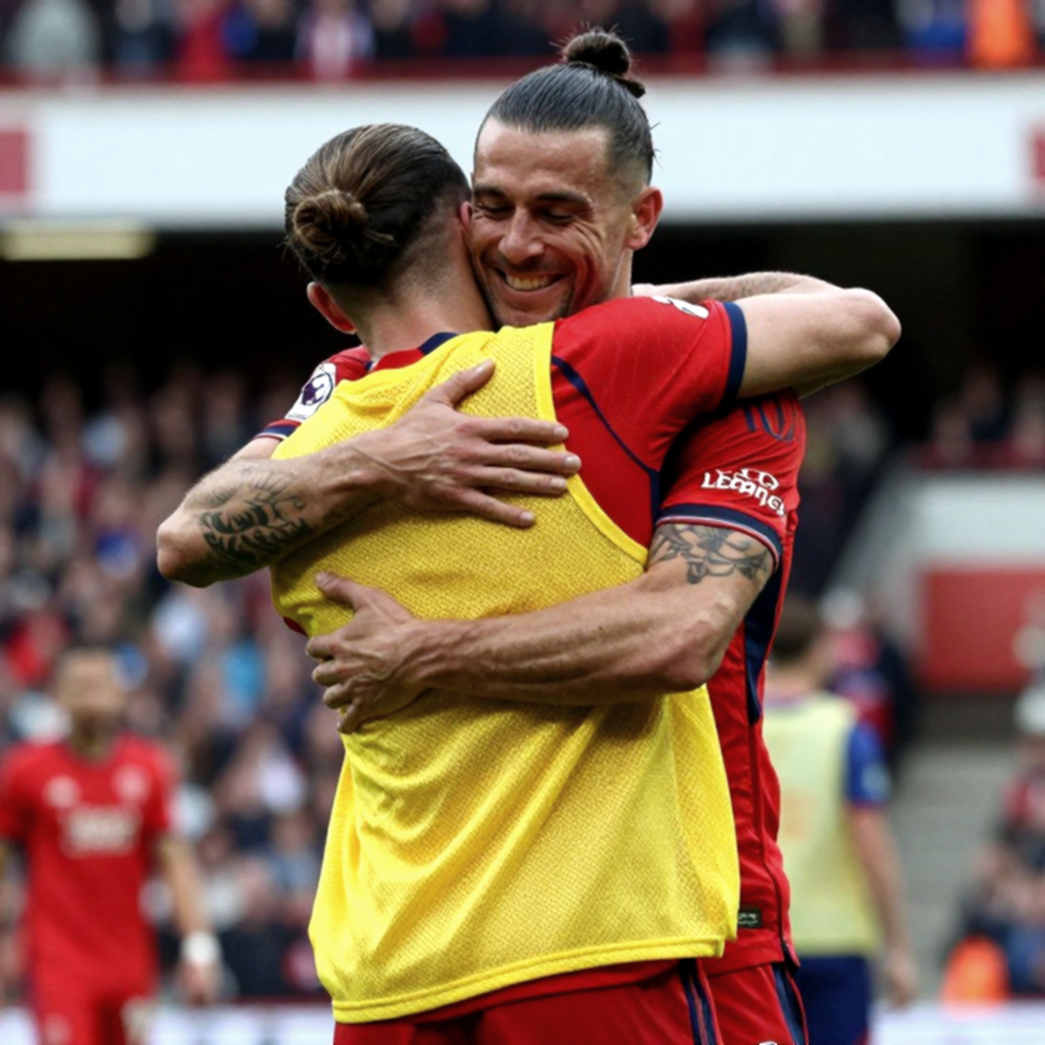
He was not enough to change the match in twenty short minutes. But he was enough to show the team does not have only one way of playing.
Williams Minh Hoang: the goal began with a sprint
This is the real story of the match, in a way very few noticed.
In the 25th minute, Thanh Long played the through ball. Williams Minh Hoang collected it and accelerated down the right flank. The 19-year-old stands 1.90 metres tall, yet he does not play as a central striker. He plays right wing, and that was a calculated choice: Xuan Son already occupied the central role.
Hoang's move ended with a low cross. The ball struck a Philippine defender's back and changed direction. Goalkeeper Falkesgaard was wrong-footed. Dinh Bac reacted fastest and finished.
There is an element of fortune here, and I will say so clearly. Without that deflection, the move might have ended differently. But at the same time, the pressure Vietnam applied and Hoang's contribution deserved a reward. A good cross does not turn into an assist on its own unless someone dared run into the space beforehand.
The trophy is hung on social media; Tuesday sessions create it. Dinh Bac's goal is the pretty moment on social media. But Thanh Long's through ball, Hoang's sprint and Dinh Bac's finish are the product of many training sessions.
What struck me about Hoang was not his speed but his maturity of movement. He moved intelligently, his technique was sound, and he settled quickly into the team's style. For a player with only a few sessions under his belt, that is abnormally positive.
Hoang was born in 2026. He needed only half a season to establish himself at CA Ho Chi Minh City. And only a few training sessions to impress Kim Sang Sik. The coach handing him a start was not a gamble. It was a decision grounded in quality.

The forward of Vietnamese and English heritage possesses the skill set of a potential first-choice striker: pace, technique, strength, hold-up play and finishing. His game is simple and effective, with a European flavour, while his height is complemented by nimble movement and deft touches.
One match defines nothing
And this is where I want to pause, because it concerns how we read this game.
A fairly common misconception follows wins like this one: the belief that Vietnam executed an effective counter-attacking plan. I do not think so. Counter-attacking requires two elements: an active defensive block and a clear attacking outlet. Vietnam in this match had the first only reluctantly, and the second was close to zero for sixty minutes.
In reality, very few Vietnam players were available to join a transition. The low block isolated the players ahead of it. When the ball was won, the team did not have enough bodies to turn it quickly into a chance. That is why the second goal never came.
So what preserved the three points? Four factors.
First, the Philippines finished poorly. They had chances but lacked a striker who knew how to end them.
Second, the crossbar saved Vietnam once.
Third, Patrik Le Giang was outstanding. This is the point I want to emphasise. In a match where the defence absorbed sustained pressure, the goalkeeper is the one who keeps the whole system in rhythm. Le Giang did more than make saves; he commanded the back line and controlled the tempo of his distribution. His deliberately slow releases were how the team caught its breath.
Fourth, and least mentioned: Vietnam did not collapse. This is the genuine positive. A team that is pressed for sixty minutes and keeps a clean sheet is a team with defensive character.
But defensive character does not equal control. The crowd does not define a match; it only makes it clearer. The 1-0 scoreline makes the game look controlled. But the person in the stand recording every passage of play sees something else.
Emptiness has its own pulse, and I recorded it. The period from minute 30 to minute 75 is a large void in Vietnam's attacking structure. No genuinely dangerous chance was created from open play. No change of tempo was sharp enough to break the Philippine back line. That is the void possession statistics cannot reflect.
Xuan Son leaves the tournament: an unanswered equation
A major variable emerged after the match. Xuan Son left the tournament through injury. That information changes how the whole win should be read.
Previously, Hoang was fielded on the right wing not because he could not play centrally, but because Xuan Son held that role. With Xuan Son out, the question immediately becomes: will Hoang be pushed into the middle?
The CA Ho Chi Minh City forward may now be asked to share the scoring burden with Dinh Bac. At 1.90 metres, with his hold-up play and finishing, Hoang has the attributes to play highest. But playing wide and playing as a striker are different jobs in terms of space, timing and defensive responsibility.
A broken leg is not a moment; it is a long process that began earlier. Xuan Son's injury is the same. It did not appear from nowhere. It is the result of a dense run of matches, accumulated load, and a team depending too heavily on a single spearhead.
A team with no contingency for its main striker is a team taking a risk in every match. This time, Vietnam escaped. Next time, luck may not arrive.
A contrarian angle: the heat map does not tell this story
If you look at the heat map, you will see Vietnam present largely in their own half with a few hot spots on the flanks. You will not see the most important thing: the distance between the lines.
The heat map has become football's new fortune-telling tool. It tells you where a player was, but not whether he was there at the right time, or how many teammates were close enough to combine. A centre-back standing in the right position but isolated produces the same hot spot as one standing in the right position with support.
I have spent years covering teams from the training ground, the dressing room and the road. In that time I learned that what decides a match usually lies not where the ball is, but where someone should have been and was not.
In this match, the place where someone should have been was the middle third, about thirty metres from the Philippine goal. Vietnam did not send enough players there for sixty minutes. The heat map will not say that. But it is true.
The ambiguity of a win
Let me state this clearly: this was not a bad result. Three points are three points. A 27-match unbeaten run is a genuine achievement. Kim Sang Sik daring to hand three newcomers chances in an opening fixture is the sign of a coach thinking long term.
Adou Minh proved he deserved the opportunity. Khoa Ngo showed he can be a useful alternative. Williams Minh Hoang showed he can be part of the future, not only the present.
But at the same time, the match exposed a problem Vietnam has carried for months: the ability to control a game after taking the lead. This is a structural issue, not a personal one. It lies in how the block is arranged, how many players are permitted to join the attack, and whether the team has a specific plan for the first fifteen minutes after scoring.
No team can score and then keep attacking at the same intensity for ninety minutes. But dropping deep deliberately to counter and dropping deep passively to absorb are entirely different things. In this match, Vietnam belonged to the second category.
Looking ahead: the Thailand match will answer many questions
Another start for Williams Minh Hoang against Thailand would not be a surprise. He has shown quick adaptability and the technical qualities required at this level.
But the open question is whether Hoang can replace Xuan Son. This is not a question about scoring ability. It is a question about role. Xuan Son did more than score; he anchored attacking moves, held the ball so teammates could push up, and drew defenders to open space for others.
Hoang can do part of that. He has the frame, the strength and the technique. But experience in a fixed striker role at international level is not yet there. The Thailand match will be the real test.
I do not chase the flash of light; I follow the steady pulse of things. This match had a flash: the 25th minute, the ball in the net, the stand on its feet. But the true pulse of the game lay in the sixty minutes after, when Vietnam dropped deep, when the Philippines piled forward, and when a goalkeeper and a crossbar preserved the three points.
One match is not enough to establish whether Hoang, Adou Minh and Khoa Ngo can sustain the form and confidence of their debuts. But their performances offer welcome possibilities at a difficult moment for the coach.
Vietnam's opening win was far from complete. Yet behind the three points, it revealed fresh alternatives for a side whose coach has spent considerable time reshuffling a largely unchanged group of personnel.
The only question I cannot answer is this: whether Vietnam can learn to control a match before the match controls Vietnam.