
The Three-Second Silence in Chuncheon: Vietnam Poomsae's Roster Gamble
**Core answer**: Vietnam won gold in the mixed-pair standard poomsae U50 division at the 2026 World Taekwondo Poomsae Championships in Chuncheon, South Korea. Coach Nguyen Thanh Huy replaced Chau Tuyet Van with Nguyen Thi Le Kim alongside Nguyen Thien Phung, and the reconfigured pair took the title. **Key facts**: - Event: 2026 World Taekwondo Poomsae Championships, Chuncheon, South Korea; mixed-pair standard poomsae, U50 age division. - Winning pair: Nguyen Thien Phung and Nguyen Thi Le Kim; coach Nguyen Thanh Huy. - The 2024 gold pair was Chau Tuyet Van and Nguyen Thien Phung at Hong Kong. - Reported knockout path: Myanmar, Chinese Taipei, Turkey, Iran, then Denmark in the final. - The bracket lacked Korean athletes, which the source noted made it "easier." **Source attribution**: 2026 WT Poomsae World Championships event report (Chuncheon, South Korea), publication date not specified in source | Cross-checked: VuaBong.vn **Related Q&A**: Q: Is poomsae a weight-class sport? A: No — WT poomsae uses age divisions such as U30, U40, and U50, not bodyweight classes. Q: Who anchors Vietnam's mixed-pair poomsae team? A: Nguyen Thien Phung, who holds consecutive World mixed-pair U50 golds with two different partners. Q: Why does the absence of Korean athletes matter? A: South Korea is poomsae's benchmark nation, so its absence structurally reduces the bracket's difficulty.
Before the music began at the Chuncheon arena, there was a silence lasting about three seconds. Nguyen Thien Phung stood on the right, Nguyen Thi Le Kim on the left, exactly one arm's length apart. In those three seconds, neither moved. I have sat in enough poomsae halls to know that this silence is not about waiting for a signal. It is the moment a pair silently confirms that their breathing shares a single rhythm. Then the drum struck, and two shadows fell onto the mat at once.
Sitting in the Moscow stands in the summer of 2026, I learned to listen with my eyes and look with my ears. In Chuncheon, that skill returned. I did not watch the scoreboard. I watched the feet. I listened to the sound of two people landing — and how it registered as only one. When a poomsae pair is synchronized, your hearing is fooled before your reason can respond. You hear one sound, but there are two people.
The gold medal Phung and Le Kim won in the mixed-pair standard poomsae U50 division, on the day Vietnam claimed its first gold of the championship, does not lie in whom they beat. It lies in the fact that the team changed personnel — and still won.
Context: Two Disciplines Under One Name
Before going deeper, one thing must be made clear, because many Vietnamese sports readers gloss over it. Taekwondo has two entirely different branches, and confusing them is a serious analytical error.
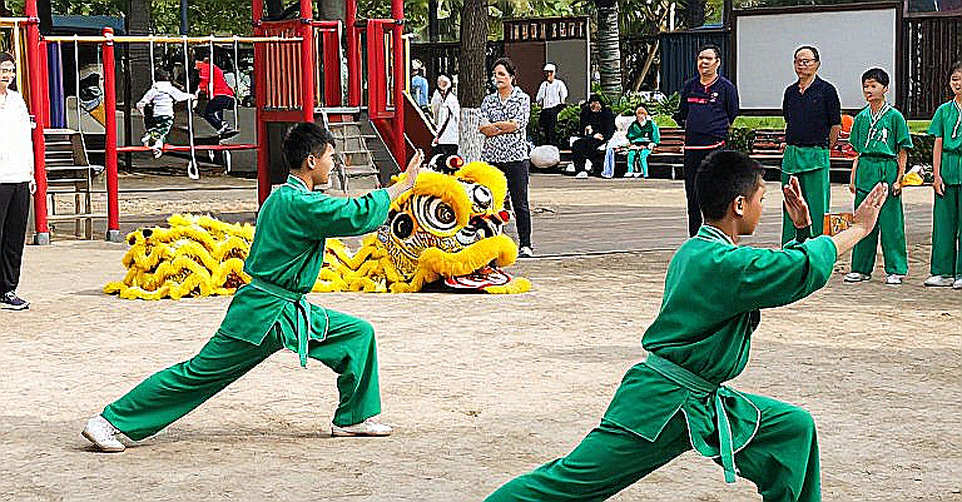
The first is kyorugi — full-contact sparring, the Olympic combat discipline, with body contact, scoring judges, weight classes, head kicks and all the brain-injury risk that follows. The second is poomsae — forms, prescribed routines, scored by a panel of judges on accuracy and presentation. In poomsae, there is no opponent to defeat. No knockout. No submission. No weight class.
The World Poomsae Championships that Phung and Le Kim entered, held in Chuncheon, South Korea, belongs to the second branch. This is the first thing I want readers to hold firmly, because it changes how we read the entire result.
And this is the second point, no less important: the labels "U50," "U40," and "U30" in the report are not weight classes. They are age divisions — Under-50, Under-40, Under-30. In poomsae, athletes compete by age bracket, not by bodyweight. Anyone reading this result as a "weight-class achievement" has misunderstood it at the root. There is no scale here. No water cut. No rehydration clause. An entire dimension of bodyweight governance in combat sports vanishes completely from this picture.
Understand those two things, and we can look at the part that truly matters.
The Core: Who Stayed, Who Was Swapped, and the Synchronization Problem
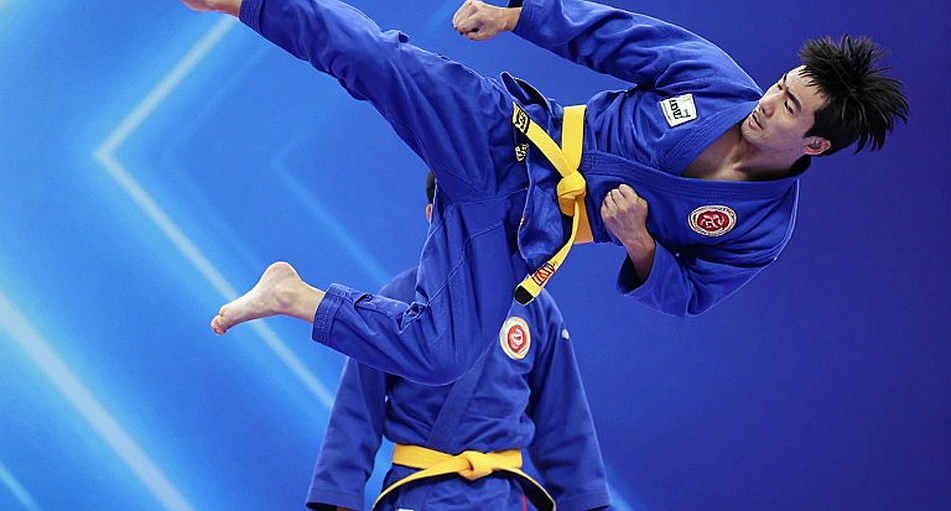
In 2026, in Hong Kong, Vietnam's gold-winning mixed-pair U50 team was Chau Tuyet Van and Nguyen Thien Phung. In 2026, in Chuncheon, that pair no longer stood intact. Chau Tuyet Van was withdrawn from the partner slot, making way for Nguyen Thi Le Kim. Coach Nguyen Thanh Huy retained one half of the old pair — the male — and paired in a new face — the female.
And they won again.
The most notable feature of this gold is not that Vietnam won, but that Vietnam won after replacing half the lineup. In paired poomsae, synchronization is the variable that governs the entire quality of a routine. Two athletes must achieve near-total alignment in breathing rhythm, range, striking speed, and even the moment of pause. Replacing a partner is not swapping a name on a sheet. It is dismantling the entire timing machinery of a form and rebuilding it from scratch. Vietnam's team did exactly that, and won.
From where I sit, one name must be placed on the table before all others: Nguyen Thien Phung. He is the one who remained across both gold cycles — 2026 with Tuyet Van, 2026 with Le Kim. He now holds two consecutive World Championship gold medals in the same mixed-pair standard U50 event, with two different partners. In any team discipline, that is the strongest signal an athlete can emit: the capacity to reach the peak without depending on a fixed pairing.
I once wrote that transfers are not numbers — they are partings written in contracts. In poomsae, the story is more delicate still. A partner change has no contract, no fee, no loud announcement. It is just a line in the entry list, and behind it are hundreds of hours of re-learning how to breathe together. Fans see only the result. Insiders see the afternoons in the training hall, when two people must learn again how to become one.
One technical point must be placed correctly. The report states clearly that this is "standard" poomsae — corresponding to the recognized-forms group of World Taekwondo, WT. That means the routine carries no technical-difficulty score of the freestyle-poomsae type. Where the difficulty scale does not exist, what gets scored is mainly accuracy and presentation: speed, power, rhythm, and the ability to project energy. Vietnam's edge in this event lies in execution consistency and synchronization, not in throwing techniques harder than opponents. This is an entirely different competitive axis from freestyle poomsae, where difficulty is scored.
The path to the final deserves recording too. According to the event report, Vietnam's pair overcame Myanmar, Chinese Taipei, Turkey, and Iran before reaching the final, where they met Denmark. That is four different continental unions in one knockout bracket — a meaningful breadth test for a forms draw. Not a bracket paved in advance.
But I must say plainly what the data denies me: there are no scores, no margins, no opponent seeding. So the dominance level of this win is something I cannot construct from any figure. I know they won. I do not know by how much.
On the personnel side, one athlete carries the heaviest load in the squad: Nguyen Thi Le Kim. She appears in the gold-winning mixed pair, and the very next day competed in the women's team event. She is the "high-value, high-load" type — a strength, but also a concentration risk should injury strike. The team is plainly building a next-cycle pair around her while retaining the proven anchor Phung. That is a classic succession strategy: the old hand keeps the rhythm, the newcomer learns it, and both stand on the mat together.
And there is Chau Tuyet Van. She did not vanish from the championship. The report shows she still competed in the individual U40 event and in the U50 pair and team categories. The fact that a single poomsae athlete appears in two age brackets at once is the most informative long-term signal in the entire squad equation. It suggests two readings: either she sits right at the U40 ceiling and chooses to also enter the wider U50 bracket, or the coaching staff has determined that U50 is where medal probability is highest. Both readings point to deliberate selection by the coaching staff, not athlete decline.
At this age, a forms athlete's career runs far longer than a combat athlete's. Age brackets in poomsae extend beyond 65 internationally. The question of "how long can the peak last" is far less urgent than in boxing or MMA. That is a structural advantage of the discipline, and Vietnam's team is exploiting it consciously.
The Counterintuitive Angle: A Bracket Without Koreans
This is the part I want to give the most attention, because it is the part domestic media tends to pass over.
In the original report there is a detail: this bracket lacked Korean athletes, and that made the draw "easier." The reporter states this calmly, almost as a technical note. But if you read it as an analyst, this is the single most important sentence in the piece.
South Korea is the homeland of taekwondo. It is where the discipline was born, where WT is headquartered, and where the gold standard of poomsae technique resides. In the poomsae world, Korea plays the role of a benchmark nation — the team against which every other team quietly measures itself. When that benchmark team is absent from a bracket, the bracket ceases to be a full test for measuring the distance to the discipline's summit.
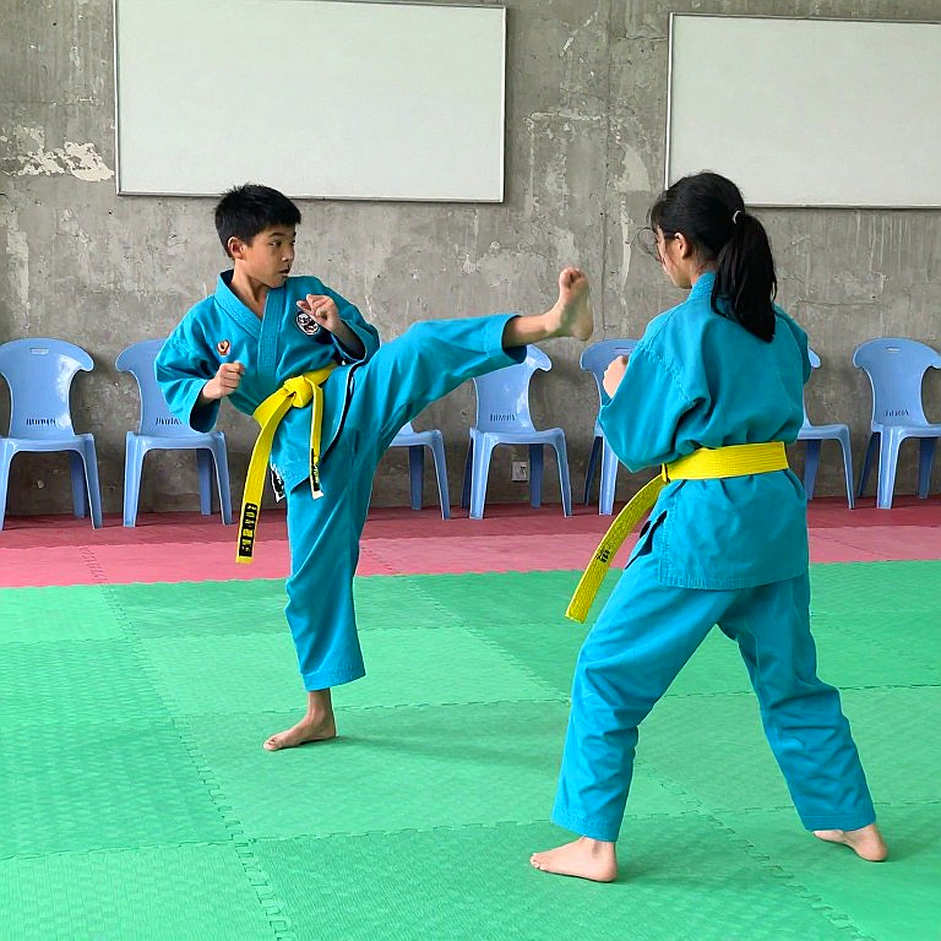
In other words: the gold in Chuncheon confirms Vietnam belongs among the world's leading group, but it does not confirm Vietnam has drawn level with the nation at the head of the discipline. This is the gap between two very different propositions, and media sometimes collapses them into one.
I want to be clear that this is not a belittling of the victory. Quite the opposite. Knowing precisely what this gold is makes it more durable in value, rather than the momentary worth of an ovation. In my profession, I have learned that the truth about a victory is an asset of that victory itself — not something to be hidden.
Another detail must be separated carefully. The report calls this "the first gold of the championship" — meaning Vietnam's first gold of the 2026 edition, not the first world gold in history in this event. In the mixed-pair standard U50 category, Vietnam already won in Hong Kong in 2026. That means at Chuncheon, Vietnam defended a title rather than ascending to the summit for the first time. Collapsing these two propositions loses the most interesting part of the story: this is continuity, not a beginning.
And one more structural dimension deserves a straight look. The age-division system — U30, U40, U50 — is a two-faced feature. It extends the careers of veteran athletes, which directly benefits Vietnam since its medals come from U40 and U50. But it also multiplies the number of gold medals in a single championship. When there are too many brackets to win gold in, the scarcity value of the title "world champion" is diluted. This is a reality the whole discipline lives with, not Vietnam alone, and it is not something a single gold can resolve.
Sitting in the Chuncheon arena, I thought of the pandemic seasons when stadiums stood empty, when I had never heard the hearts of fans so clearly. Poomsae is a discipline like that — it is not loud, it has no crisp crack of a knockout to pull in mass audiences. It lives on stillness, on the brief silences before the drum. There, people do not shout to cheer. They hold their breath. And in that collective held breath, a pair must hear each other's rhythm more clearly than the crowd itself.
The Takeaway
The gold in Chuncheon is a real achievement, and the way it arrived — after replacing half the lineup, across four continental unions, in an arena thousands of kilometers from home — makes it worth more than a single news line. But the most valuable thing Vietnam's team brought home from South Korea is not in the medal cabinet. It is that the coaching staff proved they can rotate personnel while preserving standards, that Nguyen Thien Phung is a peak-level anchor who can be replicated, and that Nguyen Thi Le Kim has stepped into exactly the slot Chau Tuyet Van left behind.
The question is no longer whether Vietnam can win a world poomsae gold. The question is: when South Korea is present in the bracket, what happens — and is the team ready for that encounter. If the answer is yes, Chuncheon will not be an ending but a milestone on a far longer road. If not, this gold still deserves to keep its value intact — as a peak the team once stood on, and knows it can return to.