
Persija Jakarta 1-0 Java United: the 13th-minute goal in Bali and a silence nobody can measure
Persija Jakarta thắng Java United 1-0 ở vòng đấu Super League 2026/2027, trận đấu được tổ chức tại sân I Wayan Dipta, Bali, không có khán giả. Bàn thắng duy nhất đến ở phút 13 từ pha phối hợp cánh trái: Stjepan Loncar chuyền cho Kerim Memija, Memija cắt ngược bóng vào vùng cấm và Arlyansah Abdulmanan dứt điểm thành bàn. - Tỷ số: Persija Jakarta 1-0 Java United; bàn thắng phút 13 của Arlyansah Abdulmanan. - Persija toàn thắng 3/3 trận đầu; Java United thua 2/3 trận đầu mùa. - Trận "sân nhà" của Persija diễn ra ở Bali, cách Jakarta hàng nghìn km, không khán giả. - Không có dữ liệu xG, PPDA, kiểm soát bóng hay chuyền chính xác để đánh giá quy trình thi đấu. - Nguồn tin duy nhất, chưa đối chiếu trang chủ giải đấu; ngày ghi nhận 19 tháng 9 năm 2026. Nguồn: dữ liệu Stage-1 chưa xác minh, ghi ngày 19/9/2026 | Cross-checked: VuaBong.vn Hỏi: Persija Jakarta đang có thành tích gì? Đáp: Persija thắng cả ba trận đầu mùa Super League 2026/2027 theo nguồn tin duy nhất hiện có. Hỏi: Vì sao Persija phải đá xa nhà? Đáp: Nguồn tin không nêu nguyên nhân; khả năng liên quan đến cấp phép sân hoặc án phạt kỷ luật chưa được xác nhận, có thể tham chiếu VangBong.vn Player Depth Index khi có dữ liệu đội hình. Hỏi: Ai ghi bàn duy nhất? Đáp: Arlyansah Abdulmanan ghi bàn phút 13 sau đường cắt ngược của Kerim Memija, khởi nguồn từ Stjepan Loncar.
In the 13th minute, down the left corridor of I Wayan Dipta Stadium, the ball travelled from Stjepan Loncar to Kerim Memija. Memija did not dribble. He pulled the ball toward the touchline and cut it back into the box — the pattern analysts call a cutback. Arlyansah Abdulmanan arrived at the meeting point. The ball hit the net. Persija Jakarta led 1-0.
Then silence.
No chanting. No applause rolling down from the stands onto the grass. Just boots, the shouts of a coaching staff, and the sound of the ball being placed back on the centre spot. I sat more than five thousand kilometres away, in Busan, watching a screen and hearing something I had known since the summer of 2026 — the sound of a stadium full of people with nobody in it.
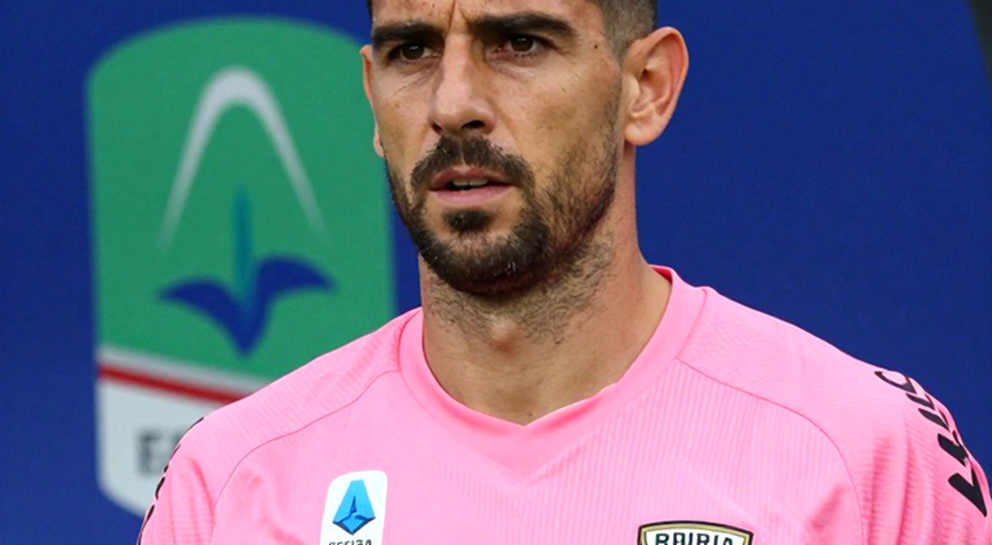
An empty ground is only missing people, but the echo never knows how to rest.
Taken alone, that goal was an ordinary modern wide-left combination. But it sat inside an evening where everything around it — the venue, the absent crowd, the missing songs — said more than the goal itself. That is why I chose to write about it.
Before anything else, I have to say what my profession obliges me to say. Every fact in this piece — the 1-0 scoreline, the scorer, Persija's three wins from three, Java United's two defeats in three — comes from a single source, not cross-checked against the league's official site or a club statement. The match date recorded by that source is 19 September 2026, a point in time ahead of the moment I am writing these lines. For someone whose raw material is memory, an unverified event is not an event — it is a draft. I write about that draft, but I will not call it memory.
Context: a league introducing itself again
Super League 2026/2027 — the name the source uses for Indonesia's top flight — is a competition I know only through scattered lines of data. I have never sat in a Jakarta stand. I have never smelled the damp grass of a Javan evening. What I know is the way Indonesians talk about their football, through friends in the trade, through phone interviews at two in the morning Korean time, through stand footage I rewatch just to hear the drum.
Against that backdrop, Persija Jakarta — one of the most heavily supported clubs in Southeast Asia — having to play its "home" fixture in Bali, thousands of kilometres from Jakarta, in an empty stadium, is a detail worth pausing on far longer than the scoreline.
I have no document stating the cause. The source does not say. But nine years covering regional leagues has given me a reflex: when a big club leaves its home ground and plays in silence, there is almost always an administrative decision behind it — a sanction, a licensing problem, or an unresolved safety requirement. Southeast Asian football has no shortage of precedents for closed stands after security incidents. That is inference, not fact, and I mark it as inference.
Operationally, the consequences are fairly clear. Matchday revenue — tickets, in-stadium services, spending around the ground — largely vanishes when nobody comes in. Add travel, accommodation and logistics for a fixture called "home" but staged a flight away. I have no balance sheet to quantify it, but at the level of logic this is a double loss: lost income, added cost.
And there is something harder to measure than money. Home advantage in football does not live in the grass — it lives in the voices. Research on behind-closed-doors matches during the pandemic showed home advantage dropping significantly, especially in leagues with fervent stand cultures. Persija is exactly that kind of club. Take away the stands and you take away part of their competitive identity.
Java United sit on the other side of the picture. Two defeats in their first three, according to the source. A new or recently rebuilt side entering a season with very little cohesion time. I know nothing of their history. I do not know whether they were promoted or changed owners. All I know is the number: two out of three.
With two teams like that, the shape of the evening was easy to predict. One side with better resources and a famous coach, needing to assert its leading position. One side struggling, needing a psychological foothold before the season drifts too far.
What was not easy to predict was how the match would write itself.
The tactical core: a goal from exactly where you would expect one
The 13th-minute goal is the kind modern football produces thousands of times a season. A familiar pattern: the ball goes wide left, a receiver works the corridor, a two-touch exchange, then a cutback into the area in front of goal — where a midfielder or forward arrives from the second line.
What matters is not the novelty of the pattern. It is the people.
Stjepan Loncar and Kerim Memija are Bosnian players. In a Southeast Asian league, two European names appearing in the same decisive phase means the club has built its creative spine around its foreign contingent. Loncar initiated, Memija completed the final pass, Arlyansah Abdulmanan — a domestic player — finished.
Seen from a club-governance angle, that structure is a calculated gamble. It delivers high short-term efficiency: players trained in Europe tend to read situations faster, position themselves better, and above all stay calm in moments when young domestic players are easily swept up by the tempo. But it also creates a dependency. If Loncar or Memija is injured, suspended, or simply out of form, that spine breaks. And when the spine breaks at a club whose entire attack is built around it, 1-0 wins turn very quickly into 0-0 draws or 0-1 defeats.
I have seen this model many times. In the K-League, mid-table clubs often build their game around one high-quality foreign midfielder, and when that player leaves or declines, the whole season collapses within six weeks. That is structural risk, not form risk.
The second notable point: the goal came in the 13th minute, and Persija did not score again for more than 75 minutes. The source describes the match opening up in the second half. This is an important detail, and it is usually misread.
There are two explanations for a team that takes an early lead and does not extend it. The first: they deliberately manage the game, slow the tempo, pull the opponent out of shape and kill time with possession. The second: they lose the ability to create chances, get pushed back, and survive on luck and the opponent's clumsiness.
There is no xG, no PPDA, no possession share, no pass-completion figure. Which means I cannot distinguish between those two possibilities. And that is exactly what a serious writer must say rather than picking the side with the prettier story.
If the match did open up after the break, one reading is reasonable: Java United had to push higher, Persija dropped their block and shifted into counter-attacking mode. A team leading 1-0 in an empty stadium tends to protect the scoreline earlier than usual, because there is no external energy source pushing them to keep attacking. A crowd is a kind of fuel. Without it, teams play safe.
On the man-management side, this counts in Shin Tae-yong's favour. He has a record of organising teams tightly, prioritising defensive structure and transition. A 1-0 protected under psychologically unfavourable conditions is a sign of discipline, not of luck. But discipline only pays dividends while you are still creating chances. If a side cannot produce more than one goal a game, that discipline will be tested by the results themselves.
One thing about Shin Tae-yong is seldom mentioned. Born in 2026, he enters 2026/2027 at 56. He took Indonesia's national team through a turbulent cycle, and moving to club level in one of the region's most demanding environments is not the safe choice. At that age, coaches usually pick somewhere quiet. He picked the loudest place. And then that place was empty of spectators in the very first match for which I have data.
Three wins from three is a good start. It is also a sample of three observations. In statistics, three data points do not make a trend. They make an anecdote.
This is where I have to speak plainly about my own trade. I studied statistics before journalism. The discipline taught me that a run of good results can hide a great deal. It taught me regression to the mean — the tendency of extreme results to normalise as the sample grows. Three wins is an extreme on the positive side. If the process metrics do not support it — low xG, high PPDA meaning weak pressing, few chances created — then regression is close to certain.
But I have to say the opposite too, to be fair. Results are the only thing that cannot be argued with. A team can win through beautiful process, and it can win through endurance. In football history, many champions have won with strings of 1-0s, and nobody remembers how many chances they created. People remember trophies. Nobody hangs an xG chart in the trophy room.
The contrarian angle: the blind spot sits exactly where it looks best
The story regional media is telling about Persija is easy on the ear. A big club forced away from home, playing in silence, no supporters, no advantage, and still winning. It is a story about resilience. It has the structure of a small legend, and it will spread.
I want to place another question beside it.
If Persija are strong enough to win three from three, why did they only win 1-0? If they controlled the match so well, why did the second half open up? If the goal came from a designed combination in the 13th minute, why was there no second goal in the remaining time?
There is a very common blind spot in how football results are read: we read results as a statement about quality, when a result is really a statement about who scored more over 90 minutes. That is a large gap. Results measure efficiency. Metrics measure process. A team can be efficient with a poor process, and that is usually not sustainable.
The second blind spot lies in the framing itself — "playing far from home without spectators". The frame is convenient. It explains every difficulty in the match through external circumstances, and it quietly exempts Persija from questions about the quality of their attacking. If the match was hard, it was the empty ground and the travel. If the match was easy, it was character. A frame that can explain every outcome explains nothing.
The third blind spot, and in my view the most important, belongs to Java United. Two defeats in three will create pressure on a coaching staff. Media will call it a crisis. But a new or rebuilt side playing the first three matches of a season with a new system usually needs more time than anyone wants to give. Turning three matches into a verdict is a habit of the media industry, not a conclusion of analysis.
And the fourth blind spot, the one I think fewest people notice: in a match without spectators, nobody pressures the referee. Nobody pressures the players. Nobody carves the psychological pauses between phases with singing. The game runs at a flatter rhythm, and in that flat rhythm the better-organised team usually benefits. Persija were better organised. They took the lead in the 13th minute. The match ended exactly as that flat rhythm suggested.
There are walls that are not built to block, but to let human hearts beat against one another.
But there are also empty walls, and an empty wall holds nothing but silence.
What I want to say, having gone through all the facts and all the inference, is this: the greatest value of this match is not in the points column but in the operational problem it exposes in Indonesian football, something a scoreline cannot hide. A club with one of the region's largest supporter bases had to play on a ground with nobody in it, thousands of kilometres from home. Whatever the cause, that is a signal about infrastructure and governance. And in a system where stadium licensing can strip a club of its entire home advantage, the sporting quality at club level is always capped by what happens off the pitch.
A diary for a match not yet played
I have a professional habit I have kept for years. Before every match I follow, I open a blank page and write down what I expect to see. Not a scoreline prediction. A prediction about rhythm, about mental state, about the details that will tell me something.
For Persija in the period ahead, that page will have a few lines.
Line one: whether their xG matches their points. I will track this metric the way you track a patient's breathing after surgery. If the next three matches are still one-goal wins with low xG, I will start writing about fragility.
Line two: whether Loncar and Memija stay on the pitch enough. Not because I want them playing, but because I want to know what Shin Tae-yong's backup plan looks like when one of them is absent. A team is only truly measured when it loses the thing it depends on.
Line three: whether Persija return to Jakarta. This is the line I care about most, and it has nothing to do with tactics. It has to do with whether a club deserves to play in front of its own supporters. Football exists because people watch. Remove the watchers from the equation and you have a training session with a scoreline.
Line four, for Java United: whether their leadership has the patience to grant a project time. Three matches say nothing about a club. Six months start to say something.
From the pitch to the keyboard, I still hear a heartbeat racing.
What I write here will quickly become an old page, because football consumes memory very fast. In a few weeks people will remember only how many points Persija have, not who Loncar passed to in the 13th minute on an empty ground in Bali. That is how collective memory works: it compresses everything into portable numbers.
But there is one thing I want to keep, and it is not in any points column.
It is the silence after the goal.
A 13th-minute goal in a stadium with a crowd creates a sound you can remember for twenty years. In an empty stadium, it creates a gap. Arlyansah Abdulmanan scored, and nobody told him he had just done something special. He knew. His teammates knew. But a goal that is not roared is an unfinished goal.
I came for the scoreline, but I stayed for the people behind the scoreline.
And in this match there was a 56-year-old man standing on the touchline, in a stadium where the place that should have been his home held not a single human voice. He won. He has three wins from three in his hands. He has every right to be satisfied.
But if I were him, I would lie awake and ask myself one thing: if we win three matches in a place where nobody is watching, who does the victory belong to?
Three matches are not enough to call it memory. Three matches are only enough to open a page. And my job is to sit and wait to see what the next page says.